Some wine estates begin to reveal themselves after the very first great bottle. Others can only be understood when viewed as a whole. Selvapiana belongs firmly to the latter. One bottle is not enough to grasp the philosophy of the estate. It only becomes fully apparent when its entire portfolio is seen as a coherent whole.
Throughout this series, we have explored the fattoria Selvapiana from different perspectives: through the distinctive character of Chianti Rufina, the history of the Giuntini family, the estate’s philosophy of Sangiovese, the iconic Bucerchiale vineyard, and the unexpectedly cool, almost Alpine world of Pomino. Each article illuminated a different facet of the estate. Only now, however, does the complete picture emerge.
Selvapiana is not simply a collection of wines. It is a carefully constructed portfolio in which every wine has a clear purpose and a natural place. That is precisely what makes the estate compelling not only for wine lovers, but also for the people who make commercial decisions every day—importers, distributors and restaurateurs.
Today, having one outstanding wine is no longer enough. More and more, importers are looking for producers with whom they can build long-term partnerships. They seek estates capable of offering not just a successful label, but a coherent story—one that resonates equally with sommeliers, retailers and consumers. Selvapiana answers that expectation remarkably well.
One Philosophy, Many Voices
Every wine in the Selvapiana portfolio exists for a reason beyond filling a market niche. Each reveals another dimension of the estate’s philosophy.
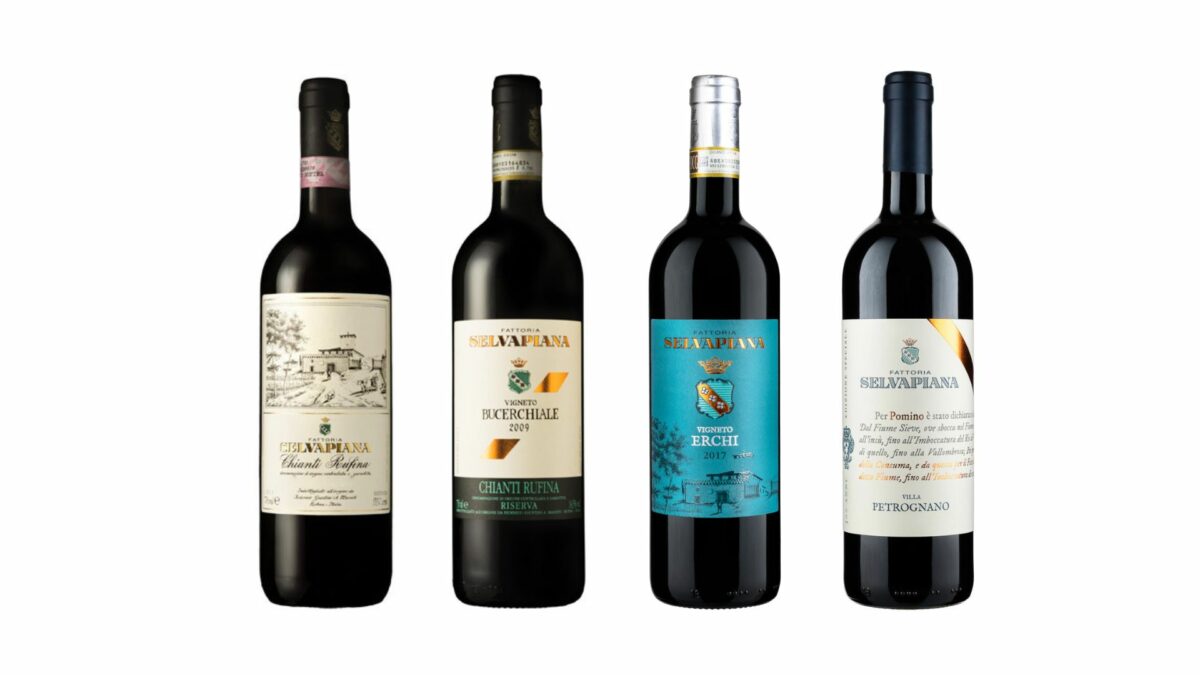
Chianti Rufina Vendemmia serves as the natural introduction to the house: a classic, elegant expression of Sangiovese that immediately explains what distinguishes Rufina from the other Chianti appellations.
The riserva Bucerchiale demonstrates just how far the concept of a single vineyard can go when it is supported by decades of observation and an intimate understanding of terroir.
The riserva Erchi takes the conversation even further. Here, the focus shifts from grape variety to place, exploring the subtle nuances that different vineyard sites can express. Even when located at few kilometers from each others.
Pomino, by contrast, changes the scenery altogether. Higher-altitude vineyards, white grape varieties – Chardonnay & Sauvignon – or black Sangiovese, Cabernet sauvignon & Merlot and a striking freshness reveal a side of Tuscany that many wine lovers never expect to encounter.
At first glance these wines seem remarkably different. Yet they are united by the same values: precision, elegance and a profound respect for origin. Each tells a different chapter of the Selvapiana story while remaining unmistakably part of the same narrative.
A portfolio that evolves with customers
Perhaps the most fascinating aspect of Selvapiana is that, as the estate unfolds, so too does the consumer’s understanding. The journey may begin with a glass of Chianti Rufina Vendemmia in a restaurant. The next discovery is Bucerchiale, a single-vineyard wine that reveals Rufina’s potential on an entirely different level. Then comes Erchi, inviting a deeper exploration of subtle variations between neighbouring terroirs.
Only later does it become clear that Pomino is not a side project at all, but another essential chapter in the story of Selvapiana. For an importer, this kind of progression is invaluable. It allows relationships with customers to develop organically. A restaurant begins with one label before expanding its list. A wine merchant introduces Chianti Rufina first, then Bucerchiale. Consumers return, not simply to buy another bottle, but to continue discovering the estate.
The portfolio ceases to function as a collection of independent products. Instead, it becomes a wine journey in which every new discovery naturally leads to the next.
What importers see
This is why it is particularly interesting to hear from those who already represent Selvapiana in their own markets.
Eric Deguire – Trinque, Québec, Canada
For us, Selvapiana fits naturally into our portfolio, as the estate embodies everything we look for in a partner: a strong family history, deep roots in its terroir, and a long-term vision driven by owner-winemakers who are fully committed to their project and have already ensured a solid succession for future generations.
Selvapiana is the undisputed benchmark for Chianti Rufina, an appellation that offers a distinct identity and the authenticity that consumers are increasingly seeking. The wines accurately reflect their origins, with a precise, pure style and great freshness. This approach is perfectly in line with changing tastes in Quebec, where wine lovers favour wines that are more approachable, balanced and authentic, and which convey a genuine sense of place.
In short, the estate embodies the excellence of its appellation whilst offering a cohesive range capable of appealing to passionate consumers, catering professionals and in-store advisors alike.
Thomas Cléry – Caves Bernard-Massard, Luxembourg
For us, Selvapiana represents much more than just an Italian estate: it is a partner that shares our vision of wine. Its family history, authenticity and commitment to the terroir are perfectly in line with what we aim to offer our customers.
The Luxembourg market is currently on the lookout for estates capable of offering a distinct identity. In this context, Selvapiana’s wines perfectly meet the expectations of both restaurateurs and wine enthusiasts.
The Vendemmia cuvée is a superb ambassador for the estate. Its rich, approachable style makes it an ideal choice for by-the-glass service, allowing as many people as possible to discover the world of Selvapiana.
Myrto Tofaridou – Phiale Wines, Cyprus
We believe that Selvapiana is synonymous to terroir, history, great winemaking and family. The fact that the vineyards have been harvested based on organic principles and that the wines produced of exceptional quality makes them stand out from a lot of wines in the Chianti region.
From our perpective, we have been working with Selvapiana for almost a decade and we see that our clients both in retail and wholesale enjoy them for their unique individual style and wide gastronomic compatibility.
Hong Dongmyung – Vinovino Co., Ltd., South Korea
In an era where global warming and grape over-ripeness pose challenges for Sangiovese, Selvapiana’s cooler microclimate is its greatest strength.
From a market perspective, this cool-climate character(relatively) is precisely what makes Selvapiana stand out, offering our clients a beautifully balanced, terroir-driven alternative that perfectly complements our portfolio.
What is striking is that, despite representing markets as diverse as Québec, Luxembourg and South Korea, all three importers ultimately emphasise the same qualities. None begins by mentioning critic scores or the commercial success of individual wines. Instead, they speak about consistency, a recognisable identity, respect for terroir and the ability of the estate to offer not just a successful label, but a coherent portfolio capable of performing equally well in restaurants, specialist wine shops and with private collectors. Perhaps that has become one of the greatest competitive advantages a wine estate can possess today.
Constency as a competitive advantage
Consistency is the thread that connects all of the importers’ observations. The wine world often celebrates great vintages, famous vineyards and impressive critic scores. Far less attention is given to something that, for professionals, is often even more important: the ability of an estate to remain faithful to its philosophy over time.
Consistency means resisting the temptation to follow every passing trend. It means producing wines that remain recognisable from one vintage to the next. It means ensuring that every new release strengthens an existing identity rather than chasing a new market opportunity.
That is exactly the impression Selvapiana leaves. Over the decades, the estate has not simply expanded its range. It has steadily deepened its identity. Every new wine has enriched the portfolio without disrupting its balance, allowing it to remain coherent and relevant across very different international markets.
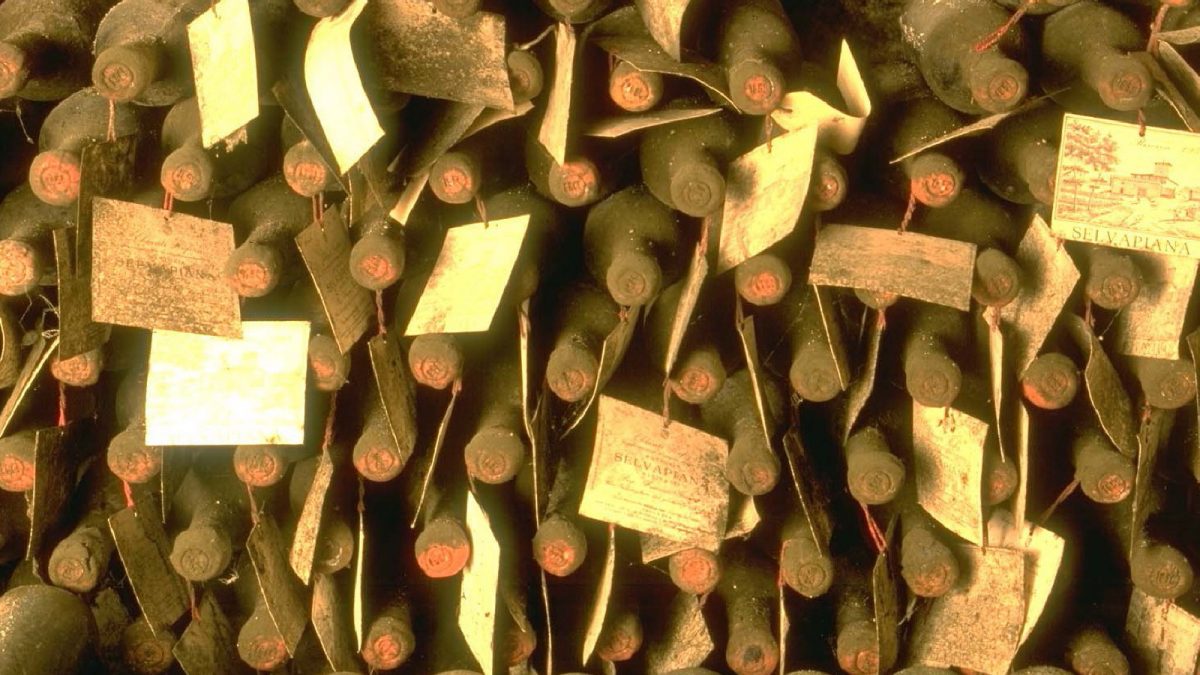
More than a collection of labels
The finest wine portfolios are not defined by the number of wines they contain. They are defined by meaning. Every bottle should answer a different question, yet together they should tell a single story.
That is why Selvapiana is perceived not simply as an estate with a broad range of wines, but as a producer that reveals Tuscany from multiple perspectives. From the first glass of Chianti Rufina to the profound single-vineyard expressions and the cool heights of Pomino, these are not separate projects but different voices telling the same story.
Perhaps that is why the best importers today are looking for more than producers with outstanding wines. They are looking for estates with whom they can build lasting partnerships. Because a great wine may inspire the first purchase. But it is a coherent portfolio that inspires a relationship to continue for years to come.