In today’s wine market, quality alone is no longer enough. The real question for importers is different: which wines can hold their position over time — not just on the shelf or wine list, but in the mind of the customer? Chianti Rufina offers a compelling answer through its terroir.
A small appellation with a clear identity
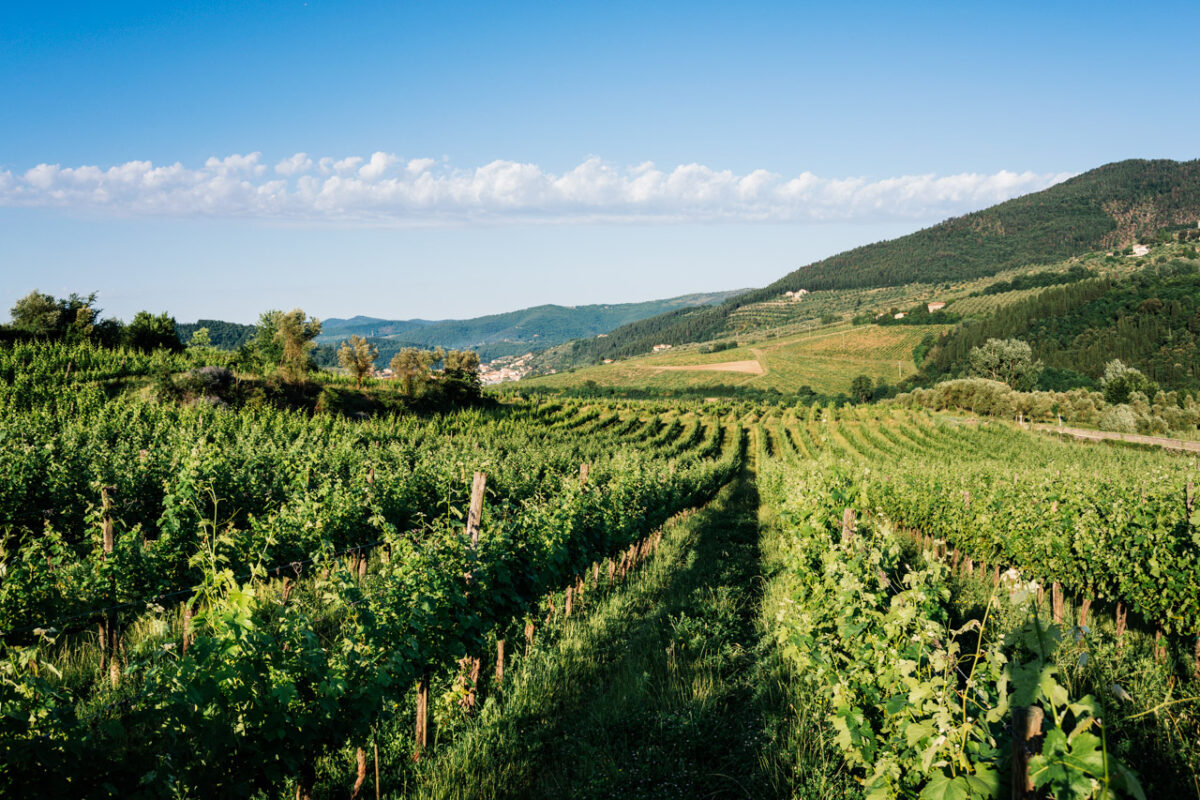
Located in the hills east of Florence, Chianti Rufina is the smallest subzone of Chianti. Only 21 producers cultivate around 750 ha of vineyards out of 12 483 ha of total land in DOCG Chianti Rufina. And yet, its scale is precisely its strength. This is not a volume-driven appellation, which translates to the distinctive character found in Chianti Rufina wines
It is a place defined by altitude and restraint. Historically, Rufina has often been described as one of the most “classical” expressions of Sangiovese — wines built not on power, but on structure and longevity.
Altitude: shaping the structure of the wine
One of the defining elements of Rufina is elevation. Vineyards here rise significantly higher than in many other Tuscan areas. With altitude comes a natural cooling effect, and with that — time and patience. Ripening is slower. Acidity is preserved. Aromatic development becomes more nuanced. In the glass, this translates into wines that feel vertical rather than broad — with clarity, tension, and the ability to evolve. For importers, this is more than a stylistic detail. It aligns perfectly with a growing market shift toward freshness and drinkability.
A continental influence: balance without excess
Unlike coastal Tuscany, Rufina is more continental in character. The significant day–night temperature variation plays a crucial role: sugars accumulate gradually, phenolic ripeness develops evenly, acidity remains intact. This balance allows Sangiovese to express itself without exaggeration. The wines are not about concentration, they are about harmony and perfect proportions.
Soils and landscape: complexity through contrast
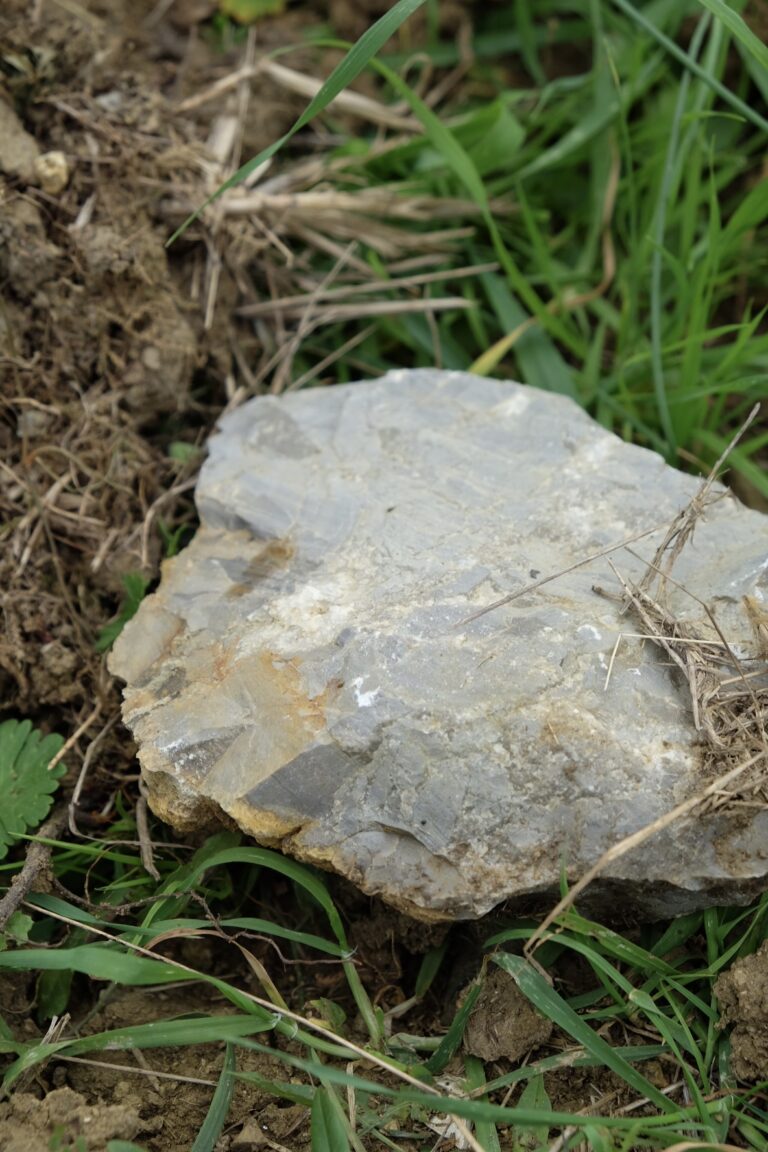
Rufina’s soils add another layer of definition. Higher slopes, rich in limestone and galestro (Italian word for Schist), bring finesse and lift. Lower areas with more clay contribute depth and structure. Surrounding forests and natural ventilation further support healthy vineyards and slow maturation.The result is a terroir that naturally produces wines with internal balance, rather than wines that rely on intervention.
Selvapiana: a benchmark of consistency
Among the historic estates of Rufina, Selvapiana stands as a clear reference point. Here, Sangiovese is approached with restraint and respect: moderate yields, careful vineyard work, focus on site expression rather than stylistic manipulation. The wines are not designed to impress immediately. They reveal themselves gradually — through texture, through length, through time. And this is precisely what creates a consumer trust and repeat purchase.
Ian D’Agata, Italian wine expert has defined sub-zones in Chianti Rufina DOCG, delimitated by the three valleys. Selvapiana extends on the first sub-zone along the Sieve river, in the central part of this valley. Rivers always create microclimate, here this is cooler and fresher as the river by running down the slopes from the Apennines, also brings fresher wind.
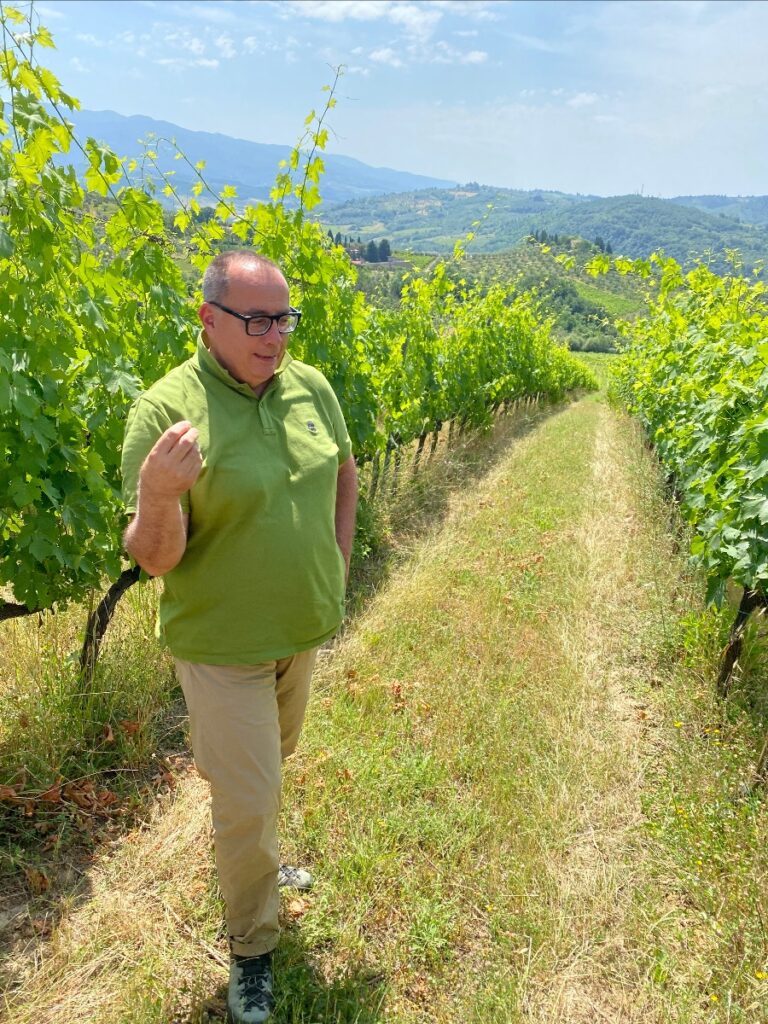
Incidentally, even if we are in the middle of the summer time, there’s always a gentle breeze blowing when you visit the Bucerchiale vineyard, which faces south and is exposed to the wind.
Why Chianti Rufina matters today
From a portfolio perspective, Rufina occupies a very strategic position: the name “Chianti” ensures recognition, the subzone offers a clear qualitative distinction, pricing remains competitive compared to Chianti Classico, the style answers the current demand for freshness-driven reds. In other words, it bridges two essential needs: accessibility and credibility.
Chianti Rufina does not try to be louder than the market. It does something more interesting: it offers wines that age well, perform consistently, and build genuine loyalty. And in today’s landscape, that kind of quiet strength is not a limitation — it is an advantage.