
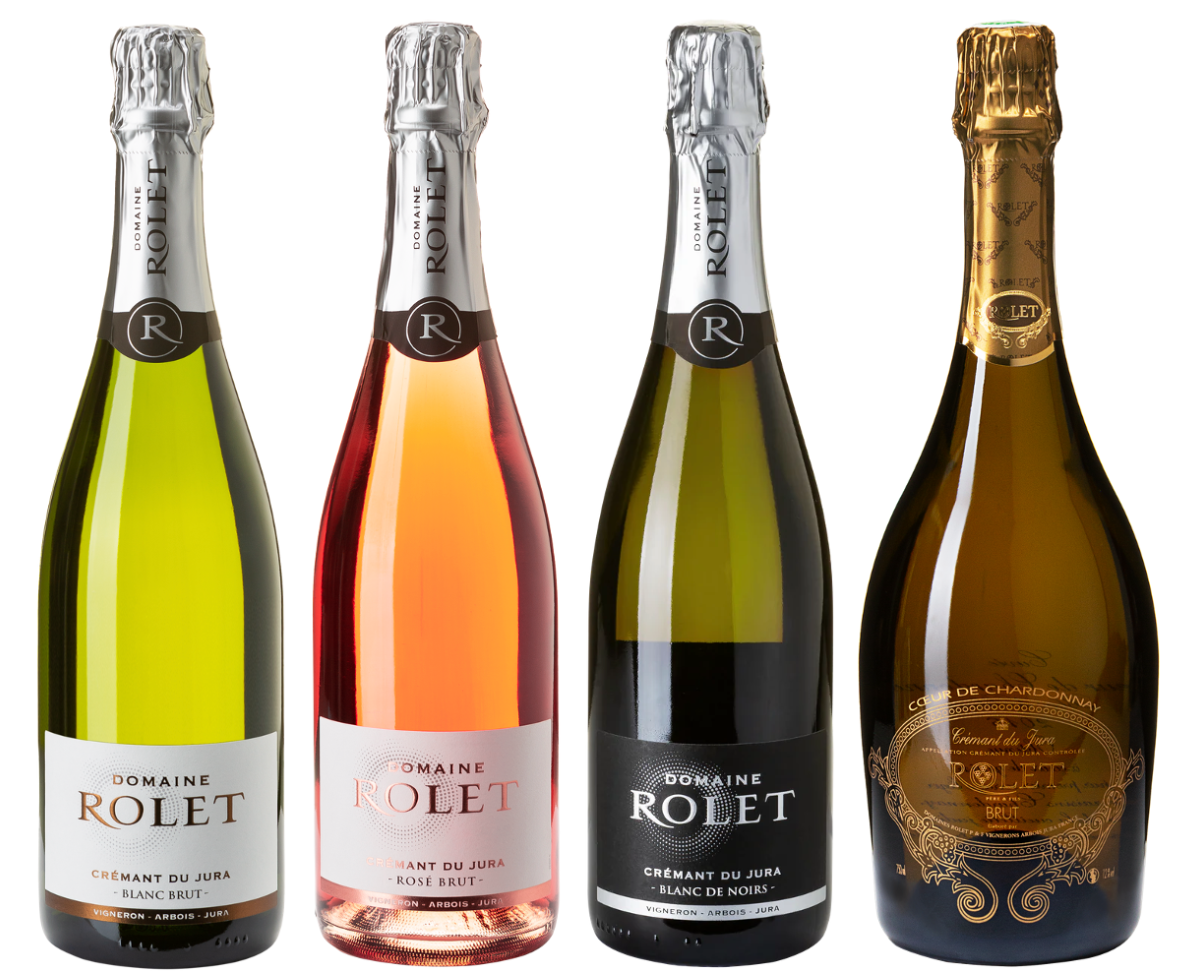
This Autumn was quite the celebration in the Jura, and with reason, the AOC Crémant du Jura was celebrating 30 years anniversary! Luckily at Domaine Rolet, there were many bottles to pop especially for this occasion. But did you know Domaine Rolet’s importance in creating this appellation? Here, we recount the story of Pierre Rolet, and his involvement in this important appellation, now known and appreciated internationally!
On October 9, 1995, the decree establishing a new appellation in the Jura was officially published: AOC Crémant du Jura. This marked the culmination of work that began in the late 1980s by Pierre Rolet, winery director at his family’s estate Domaine Rolet in Arbois, who at the time was president of the Arbois winegrowers’ association, vice-president of the Jura winegrowers’ association, and the Jura’s representative to the INAO.
It took five years of sometimes spirited discussions and a great deal of persuasion to convince all the region’s winegrowers to move from producing sparkling wine with no appellation to an AOC Crémant.
We asked Pierre Rolet to reflect on how the idea originated and the process that led it to succeed:
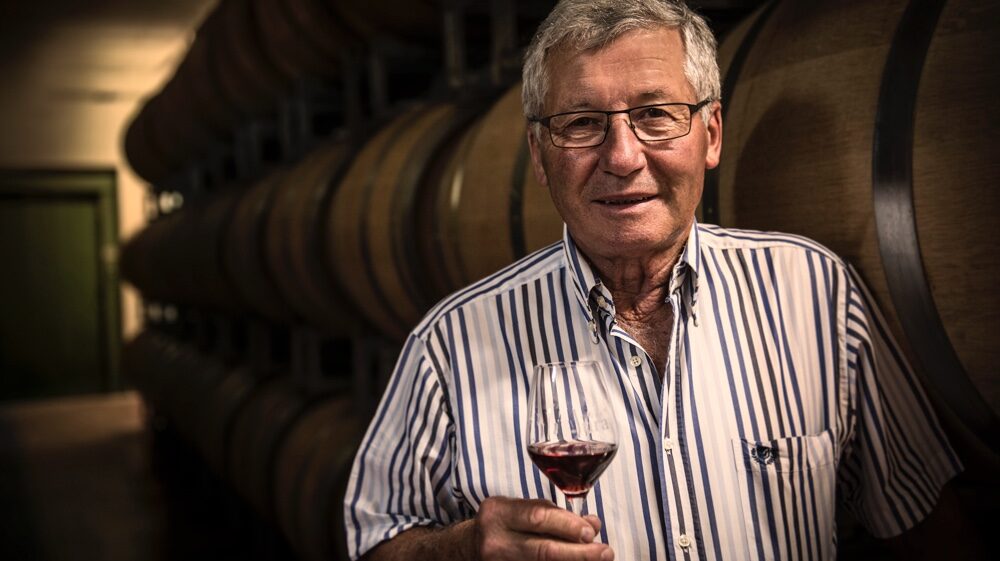
Pierre Rolet's interview: November 2025
“The Jura has always produced sparkling wines — they have existed here for more than a century and a half — but without an appellation. I noticed that the creation of Crémant de Bourgogne, and shortly after Crémant d’Alsace, helped develop a strong quality image among professionals and consumers.
At the time, sparkling wines from the Jura were known only locally, and the quality was inconsistent. That’s where the idea came from: to link ourselves to the Crémant family.
This brought many constraints, because Crémant production rules are stricter.
- Only 150 kg of grapes can be used to produce 100 liters of must, so pressing must be handled delicately.
- The first and last press juices must be separated.
- And all of this is monitored.
So I had to convince my fellow producers of the merits of the idea. With a few early supporters (André Tissot, Daniel Dugois, Lotain Grand, the director of the Arbois Fruitière, and Marcel Jacquier, director of the Maison des Vins de Crançot), we organized blind tastings of sparkling wines to show everyone the difference in quality and begin to change minds.
There were already winemakers in the region producing sparkling wines aged on lees and using methods close to Crémant, so we were able to compare their wines blind against other sparkling wines made without strict rules. The differences in quality were clear, and more and more colleagues came on board.
However, at the same time, a petition had been launched by those opposed to the idea of eventually producing only Crémant in the region. This was a requirement from the INAO, which had observed that when crémants and basic sparkling wines coexist, crémant struggles to find its place.
The petition collected 130 signatures, which complicated the process.
I tried to remain diplomatic in order to continue convincing people that an AOC Crémant was a good solution for all of us — to guarantee quality and help build the reputation of Jura wines. To ease concerns, I proposed giving winegrowers five years to stop producing basic sparkling wine — a smoother transition.
The result:
- In the second year, only five producers were still making basic sparkling wine.
- In the third year, none remained — everyone could see that the quality had clearly improved.
The application was completed in February 1995, but by September the decree still hadn’t been published, and I was getting worried because harvest season was approaching.
I had to ask the local MP to intervene. Finally, after six months, it was signed on October 9, 1995.
This appellation really helped us in our early export efforts. In the 1990s, our red wines, naturally light in color, were not very noticed, and our more distinctive wines were sometimes difficult for customers to understand. Buyers didn’t know how to position Jura wines.
With the image of Crémant du Jura, we were all able to open new international markets.
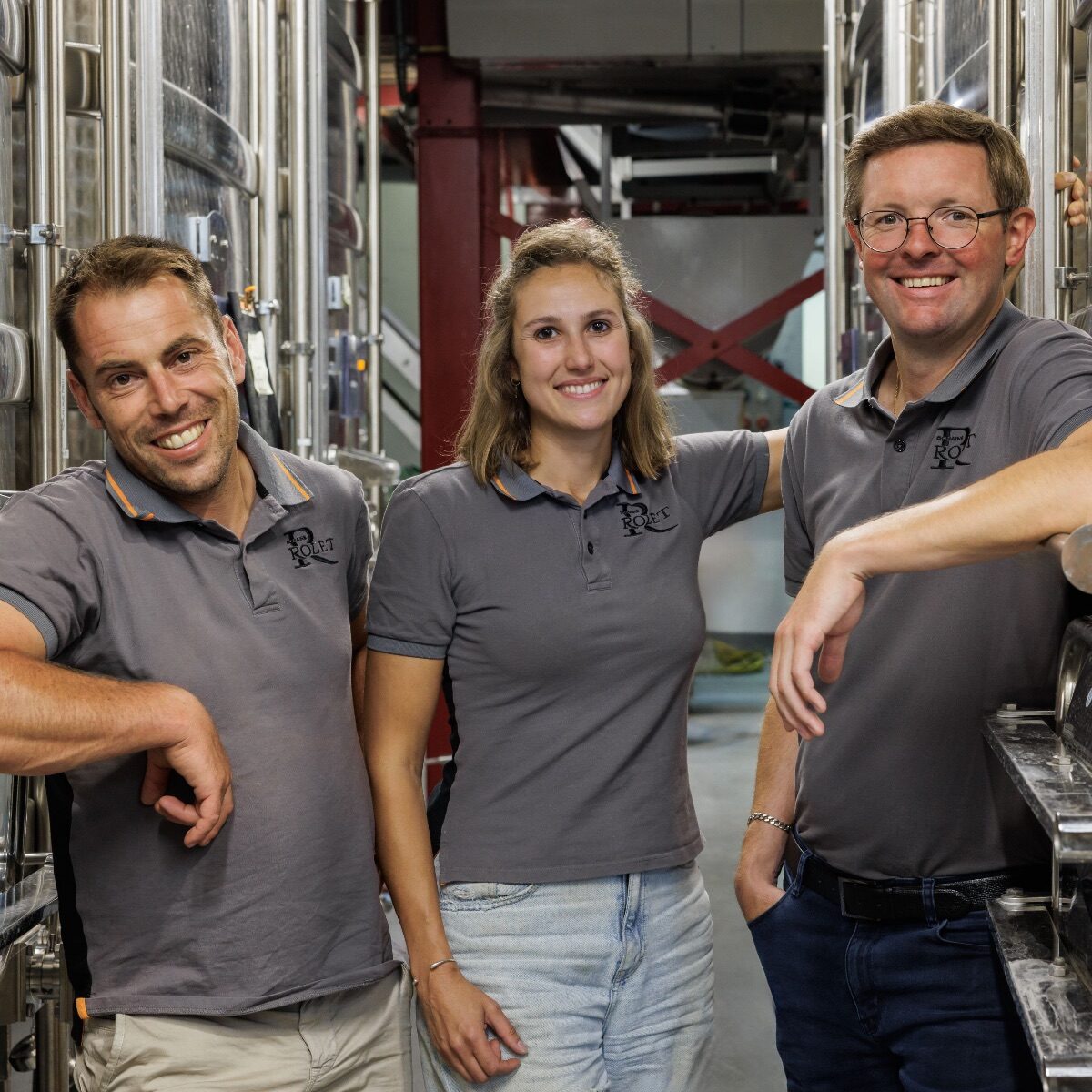
Domaine Rolet's team today: Viticultural director Louis Morel, Vigneronne Chloé Weber, and Winery Director Cédric Ducoté.
Since 2018, Cédric Ducoté has been managing Domaine Rolet with the same commitment to quality as before.
The vinification of our crémants is extremely meticulous, with slow pressing. The ageing of the base wines on fine lees lasts until Spring, allowing us to bottle wines with beautiful initial substance. They did not undergo malolactic fermentation in order to preserve the precision and definition of the base wine. Finally, the ageing on laths is long, in order to obtain a fine bubble, aromatic complexity, and impressive length.
Thus, our Crémant Brut is aged for 3 years on laths, the Blanc de Blancs Cœur de Chardonnay for 4 years, and the Blanc de Noirs for 4 years. A precise range that prioritizes time, with regular and recent disgorgements.
Once again this year, our crémants have been widely recognized in numerous competitions and by both specialized and general publications such as the Bettane & Desseauve Guide, La Revue du Vin de France, Le Figaro, Vinum, etc., and have received many fine awards.
There is no doubt that our Jura crémants are among the essential wines of our entire range. However, we are equally committed to preserving the distinctiveness of Jura wines with our red wines, white wines, and of course our vins sous voile, expressive and emblematic of our beautiful region, though increasingly rare in the Jura.
For this reason, we are replanting the Trousseau and Poulsard grape varieties to broaden the diversity of our range and enhance parcel-specific expression. The selection of vins sous voile is rich and spans two appellations: Arbois and Côtes du Jura.
Championing the colours of the Jura is also rooted in the collective initiatives to which the estate has always been committed, through emblematic regional events such as the Percée du Vin Jaune and the Biou festival.
The Jura remains a small region in size, but great in identity and in the quality of its wines.