
Tuscany has trained wine enthusiasts to think in red – Sangiovese, Chianti, Brunello, Super Tuscans — great stories of the region are told through tannin, time and the evolution of red fruit in the glass. Pomino breaks that habit and offers another reading of Tuscany: cooler, fresher, more lifted in both red and white wine expressions. For Selvapiana, this is not a side note, but an extension of the same instinct that defines its Rufina wines.
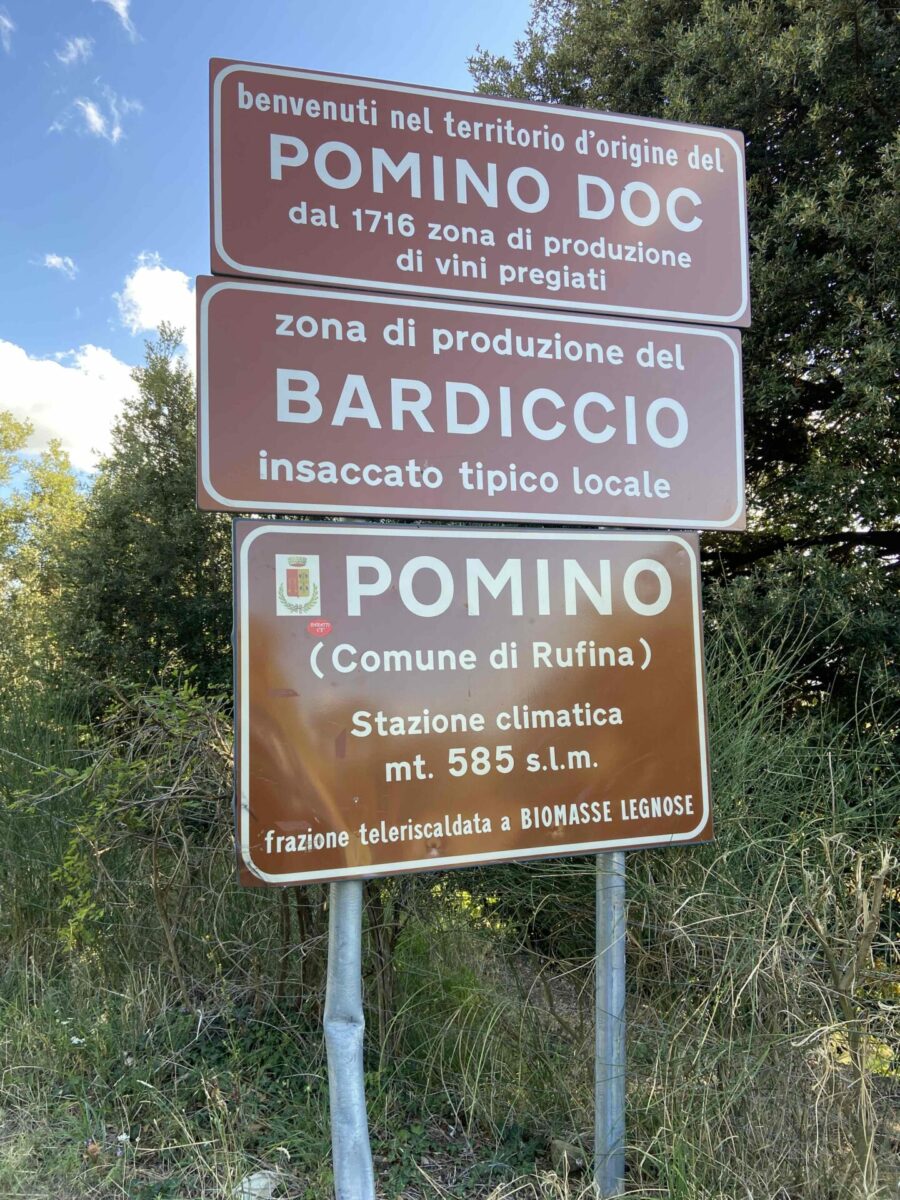
A small appellation with a long memory
Pomino feels like a hidden treasure in the Tuscan wine map.
Set at the foot of the Apennines, bordering the east of the DOCG Chianti Rufina, close to the border between Tuscany and Emilia-Romagna, it belongs to another rhythm of the region — higher, cooler, less obvious than Chianti or Brunello. Small in scale, it carries real historical weight.
For Selvapiana, Pomino entered the story through friendship as much as strategy. The estate now cultivates four hectares at Petrognano a project born from the relationship between Francesco Giuntini and Countess Cecilia Galeotti Ottieri, owner of Villa Petrognano. This is not an anonymous extension of the portfolio, but a specific place with a human story behind it. Today only 2 producers make Pomino wines : Frescobaldi on almost the whole surface and Selvapiana.
If Rufina is Selvapiana’s great red-wine language, Pomino is its “mountain dialect” — rarer, fresher and deeply historical.
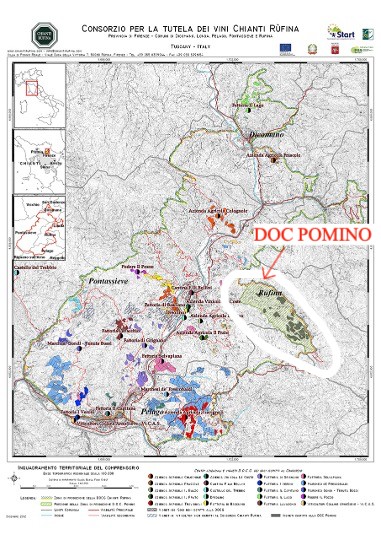
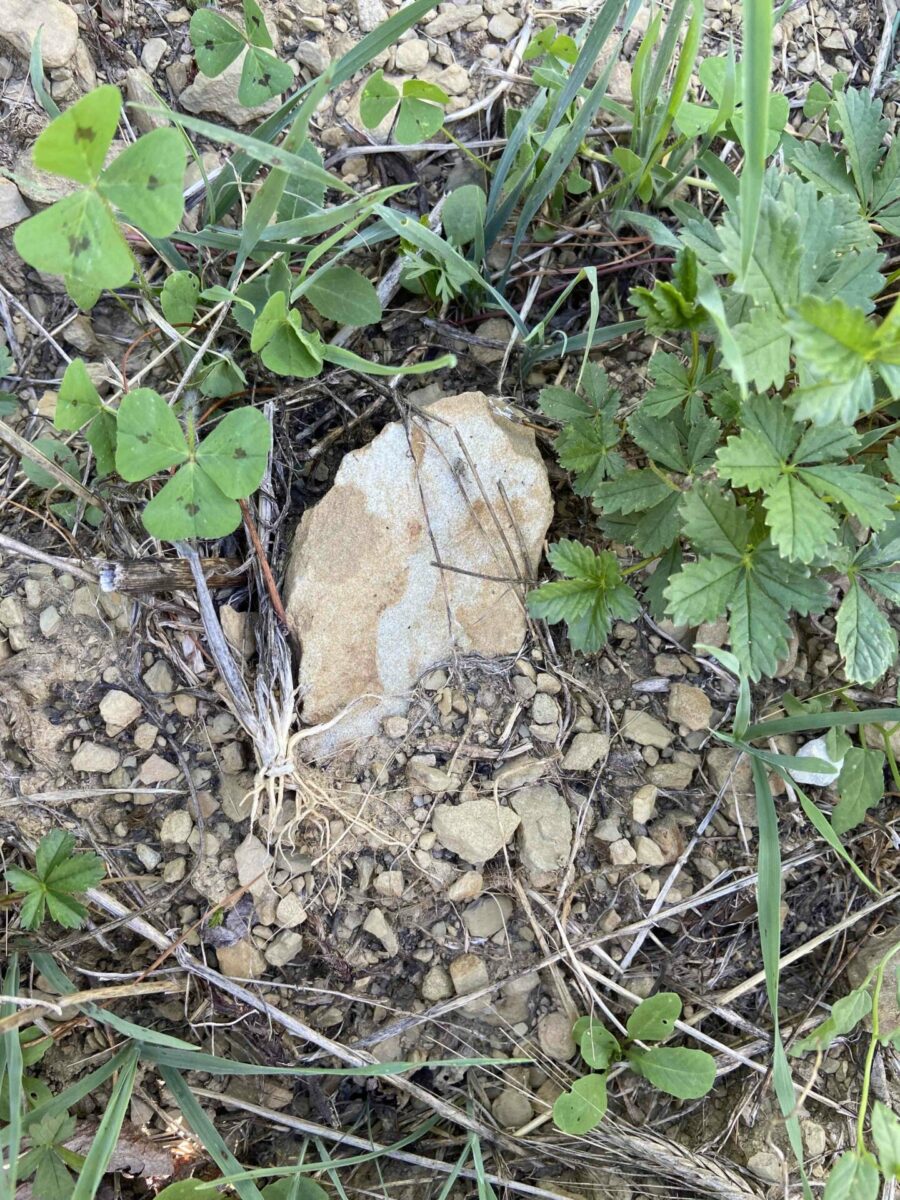
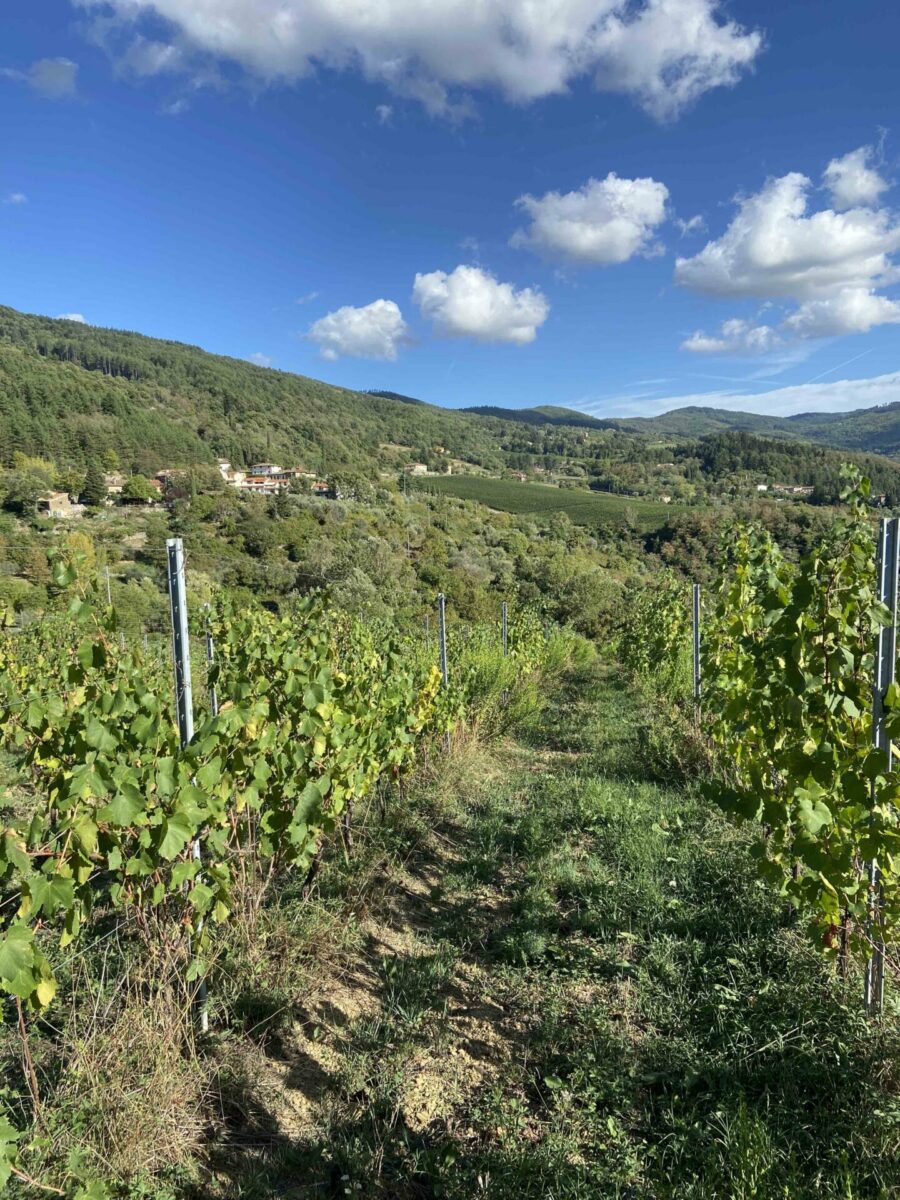
Freshness in Pomino is not created in the cellar. It begins much earlier — in altitude, stone, drainage and air. Although Pomino DOC covers roughly 130 hectares, Villa Petrognano works with a very precise and limited vineyard surface: 4.26 hectares in total, including 2 hectares of Chardonnay and 2.26 hectares planted to Merlot, Cabernet Sauvignon, Pinot Noir and Sangiovese.
At around 400 metres above sea level, the vineyards ripen slowly, shaped by cooler nights and a distinct mountain influence. Dry, stony galestro soils give the vines both constraint and definition. Altitude here is not a picturesque detail, but a mechanism of quality: it preserves acidity, stretches the growing season and keeps the wines from becoming heavy.
It is hardly surprising that as early as 1716, Cosimo III de’ Medici, Grand Duke of Tuscany, had already defined this area, considering it to be one of the four finest regions for producing great Tuscan wines.
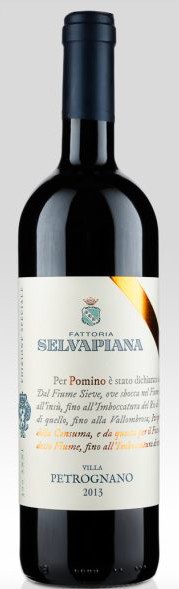
Pomino Rosso is made from 60% Sangiovese, 20% Cabernet Sauvignon and 20% Merlot. In this appellation, the blend is not only a stylistic choice but also part of the identity of the DOC: a pure Sangiovese wine cannot be produced under the Pomino DOC rules. The result is a red wine where Sangiovese brings energy and Tuscan tension, while Cabernet Sauvignon and Merlot add structure, depth and a broader frame.
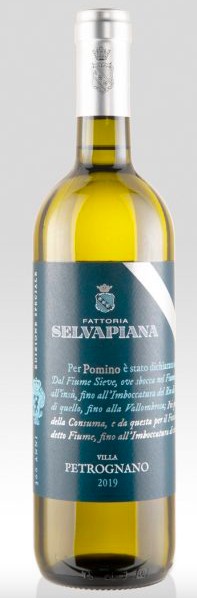
Pomino Bianco, made from Chardonnay and Sauvignon Blanc, follows the same logic of precision. Stainless steel protects aromatic clarity, while time on fine lees adds texture without blurring freshness. There is no malolactic fermentation, allowing the wine to retain its bright acidity. The result is precise, lifted and gastronomic — a white wine built not on volume, but on tension.
The white side of Tuscan altitude
Pomino Bianco may be the least expected path into Selvapiana’s world — and one of the most useful. Tuscany is rarely defined internationally through white wine. Pomino challenges this assumption. Here, Chardonnay and Sauvignon Blanc do not imitate an international model; they translate cool air, stony soils and mountain influence into freshness and precision.
The first vintage was released in 2021, making it a recent but natural chapter in the estate’s portfolio. In Rufina, Selvapiana’s philosophy speaks through Sangiovese and red wines. In Pomino, it finds another voice that exists in both colours.
For export markets, this is valuable: an Italian white made from familiar varieties, but with a story that belongs entirely to Tuscany. It can stand where buyers might look for Pinot Grigio or Vermentino, while offering more historical depth and gastronomic tension.
Pomino Rosso could easily be misunderstood. On paper, it looks familiar: Sangiovese, Cabernet Sauvignon and Merlot. But this is not a miniature Super Tuscan. Its logic is older and more rooted in place and history.
The Sangiovese is aged in large casks to preserve freshness, while Cabernet Sauvignon and Merlot spend around a year in barriques, adding structure without overwhelming the wine.
For importers, Pomino Rosso speaks two languages at once: Tuscan identity through Sangiovese, and international accessibility through Cabernet and Merlot. With limited production, it also offers a natural argument for selective positioning in restaurants and specialist retail. A bridge wine, perhaps — but one with real landscape beneath it.
Recognition beyond the obvious Tuscany
Pomino does not need to shout for attention, but recognition helps open the door. For a small, historic appellation, international critic attention gives buyers confidence to look beyond Tuscany’s most familiar categories. Recent vintages of Villa Petrognano have attracted attention from critics including James Suckling and Wine Spectator — not to display in a trophy cabinet, but as a sign that Pomino’s relevance travels beyond local history.
Its value lies not only in points, but in usefulness. Pomino gives Selvapiana a second export-friendly vocabulary: white, fresh, historical, high-altitude and highly distinctive within Tuscany. For an importer, that combination is rare.
Why is Pomino is a smart export wine
Pomino’s value lies precisely in the fact that it is not the obvious Tuscan choice. Chianti, Brunello, Bolgheri and Super Tuscans are already crowded doors into the region. Pomino opens another one: smaller, more historic, less expected and therefore useful for a portfolio that needs distinction as well as recognition.
For Selvapiana, dedicated to Sangiovese , it broadens the conversation beyond Chianti Rufina and Sangiovese, toward a wider high-altitude identity: freshness, restraint, precision and mountain influence.
Pomino Bianco offers importers a white Tuscan wine with historical depth and internationally understandable varieties. Pomino Rosso, with Sangiovese at its core and Cabernet Sauvignon and Merlot adding familiarity, creates a bridge between Tuscan identity and international reference points.
What makes Pomino export-friendly is this combination: familiar grapes, rare origin, historical legitimacy and a fresh-driven style suited to contemporary drinking. It has a story — Petrognano, friendship, the Apennines, the legacy of 1716 — but also a practical place at the table. Pomino is not just a charming side chapter of Selvapiana. It is a commercially intelligent one.
Pomino completes the picture
Pomino is not the most obvious chapter in the story of Selvapiana.
And that is precisely why it matters. If Chianti Rufina gives the estate its red-wine architecture — Sangiovese, structure, longevity and the discipline of place — Pomino opens another window onto the same philosophy.
The language changes, but the text remains familiar: altitude, freshness, restraint and a close reading of landscape. It does not compete with Rufina, it actually extends it.
If you want to continue the read with the last article 6/6, clic here
