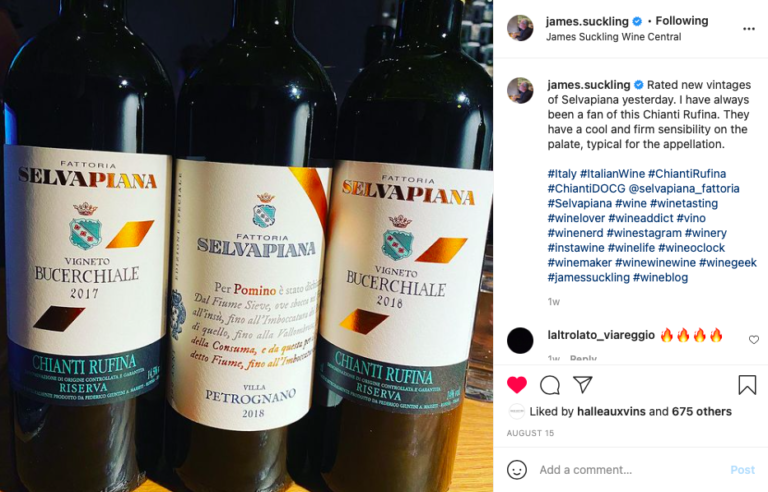
In Tuscany, today, Sangiovese is everywhere. It shapes the landscape, defines identity, and often sets expectations before the wine is even poured. Yet its ubiquity does not automatically translate into meaning. What ultimately matters is not the presence of the grape, but the way it is understood.
What is often overlooked is that Sangiovese, now deeply associated with Tuscany, did not originate here. Its roots are believed to lie further south, in regions influenced by Magna Graecia, where viticulture was already highly developed.
Its presence in Tuscany is the result of a transfer — of both plant material and knowledge. Wealthy Florentine landowners, often granted estates as a form of political reward, were not initially wine specialists. They turned to the south, sending workers to learn and bringing back both expertise and vines that proved exceptionally well adapted to Tuscan conditions.
This historical dynamic finds a direct parallel in Selvapiana itself. When Michele Giuntini acquired the estate in 1827, he was not a winemaker, but a banker — part of that same lineage of landowners whose role was not to impose style, but to create the conditions for it to emerge. At Selvapiana, Sangiovese is not something to be moulded into a predefined style. It is approached as a form of expression — one that is inseparable from place, and responsive to it.
As Professor Attilio Scienza, one of Italy’s leading authorities on viticulture and terroir, observes, Sangiovese is among the country’s most significant grape varieties, distinguished by its capacity to express variation across soils, climates, and viticultural practices.
An intimate relationship with place
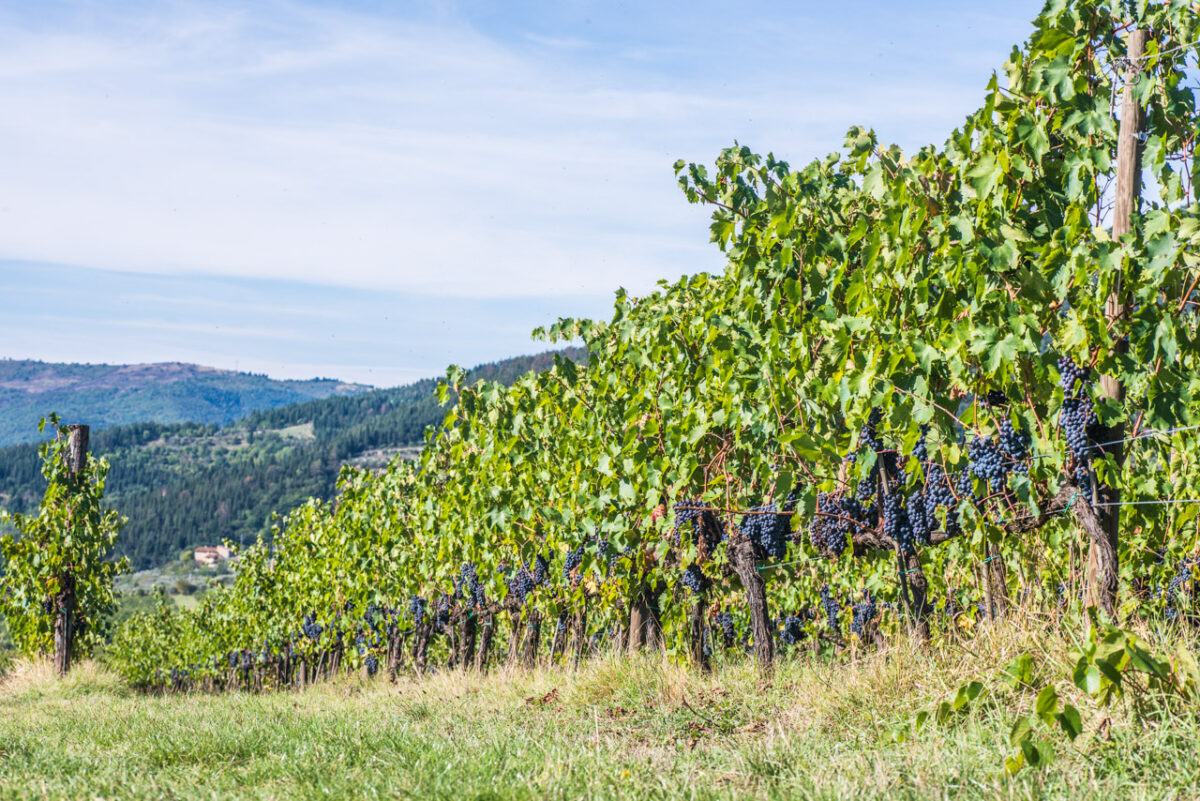
Selvapiana describes its wines as “an expression of the intimate relationship between the Sangiovese vineyard and the land of Rufina.” This is not a rhetorical statement, but a working principle. Here, Sangiovese is not adjusted or directed toward a stylistic goal. It reacts to altitude, to soil composition, to climate — to the precise conditions of Rufina.
This sensitivity to place is not incidental. Professor Attilio Scienza, a leading figure in Italian viticulture and terroir research, emphasises that Sangiovese is highly responsive to terroir, and even within small geographic areas, differences in soil and exposure can lead to markedly different expressions.
The result is not something assembled or engineered, but something shaped directly by its environment — inseparable from it.
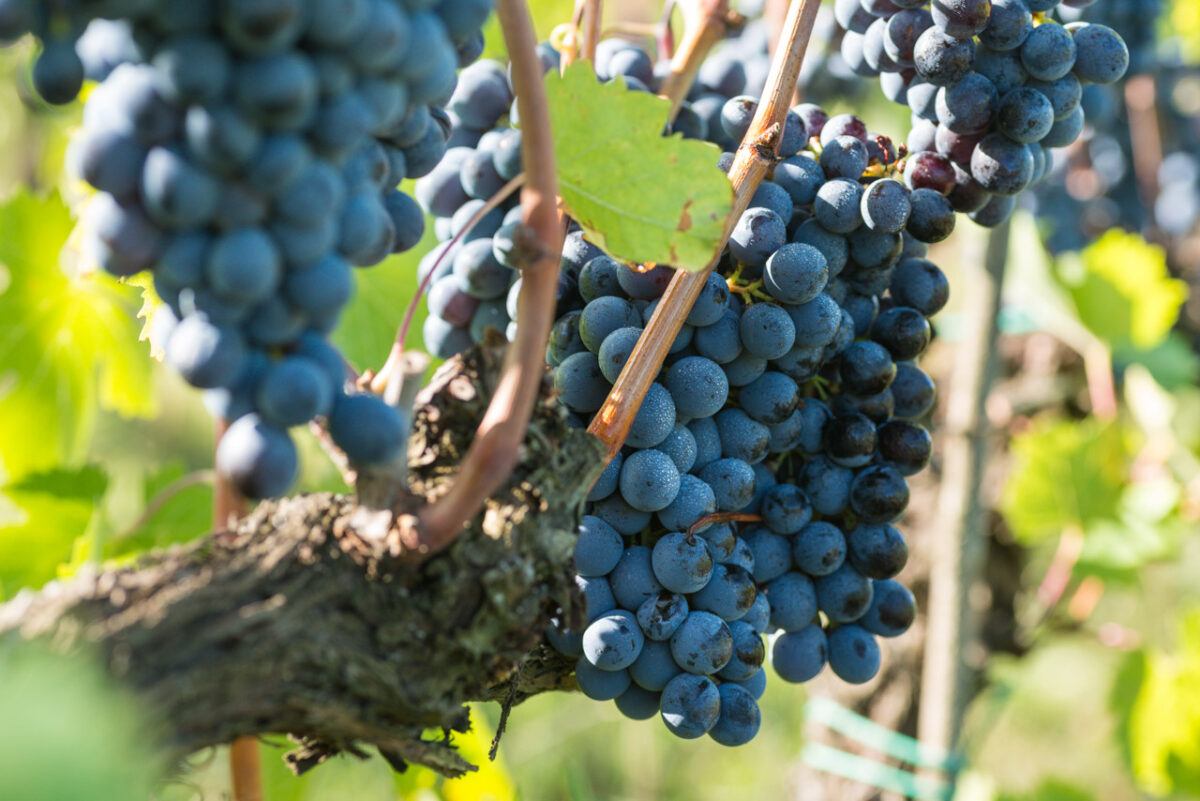
Chianti Rufina offers a setting that shapes Sangiovese with particular finesse. Set in the foothills of the Apennines, the vineyards benefit from cooler temperatures and a more continental climate, where ripening unfolds at a slower, more measured pace. This extended cycle preserves freshness and allows the wine to build its structure gradually, without excess.
This is especially significant for Sangiovese, a variety characterised by early budbreak and a long vegetative cycle, often reaching full maturity only in the final days of summer or even early autumn. These last stages of ripening are decisive, allowing acidity, tannin, and aromatic complexity to align.
In the glass, the effect is immediately perceptible. Acidity remains vibrant and well-integrated, aromatics are finely detailed rather than expansive, and the structure forms with precision instead of weight. Compared to warmer zones of Tuscany, where richness often defines the style, Rufina follows a different trajectory. Here, the focus is not on power, but on articulation. Sangiovese takes on a more linear, more defined profile, with a sense of transparency that brings its origin into sharper focus.
This aligns with Scienza’s observation that cooler climates tend to produce fresher, more vibrant and aromatically defined expressions of Sangiovese, while warmer areas lead to riper and fuller-bodied wines.
Restraint as a stylistic choice
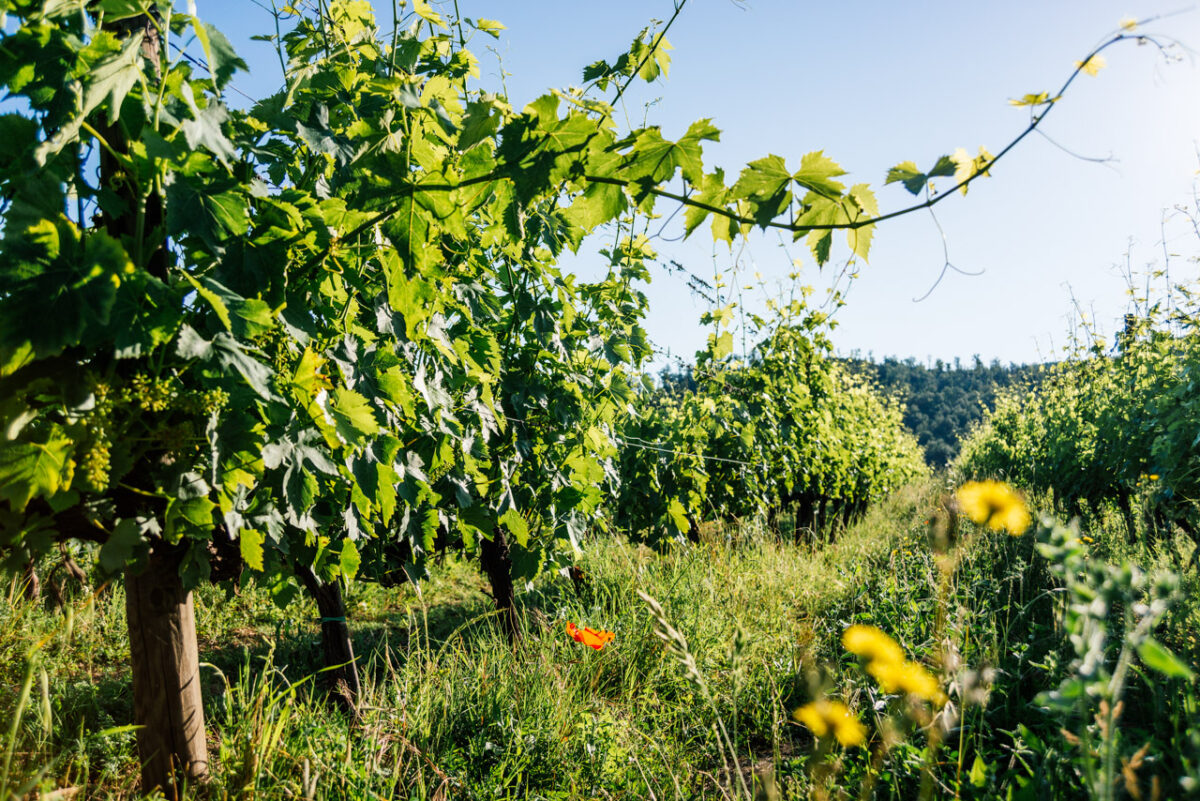
One of the most revealing aspects of Selvapiana’s approach lies in what is deliberately left undone. At a time when many producers were turning toward international varieties or amplifying style through oak, Selvapiana chose a more restrained path, remaining anchored in Sangiovese and in the natural balance of Rufina.
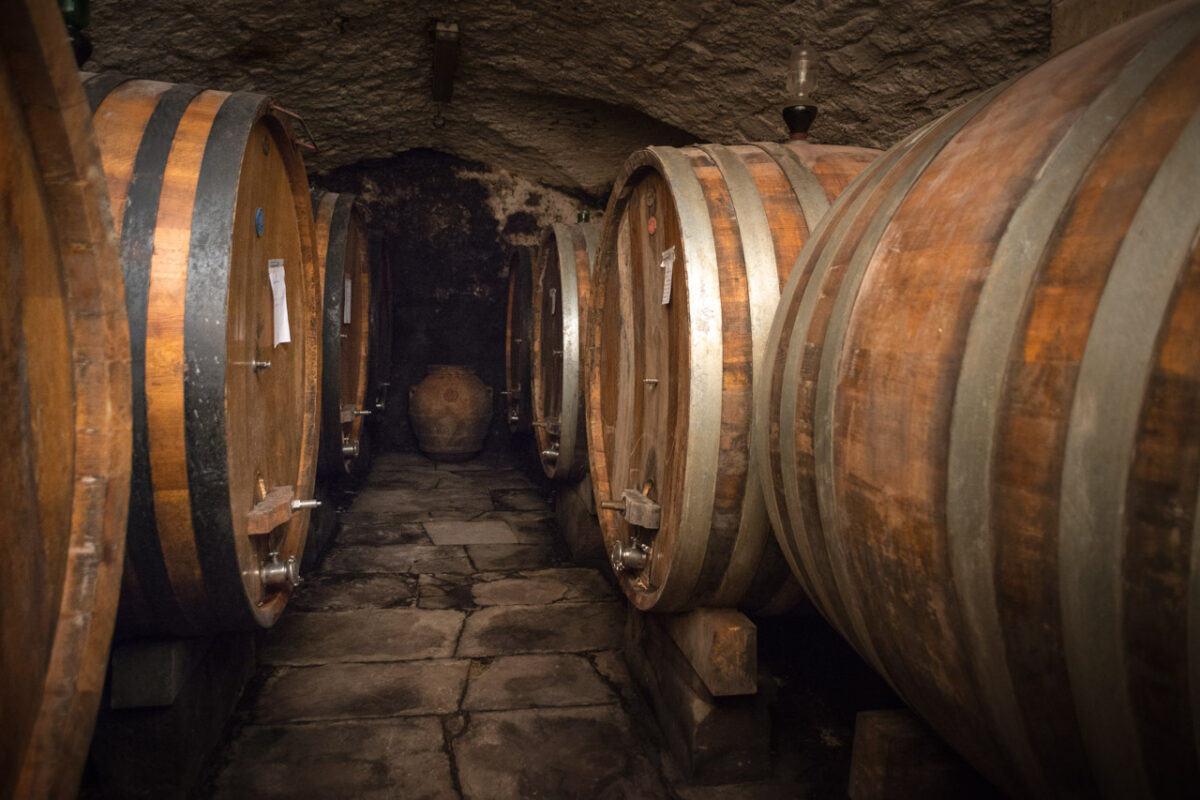
In recent years, this philosophy has been further refined. Since 2019, under the direction of Niccolò Giuntini, the estate has progressively reduced the role of small oak barrels, favouring larger formats and concrete vessels. The intention is not stylistic change, but greater precision — allowing the wine to express its structure without overlay.
As Niccolò Giuntini explains, “our aim is not to add anything, but to allow the wine to find its own balance through time and appropriate material choices.”
This restraint is not about reduction, but about precision. Extraction is guided rather than pushed, oak supports rather than defines, and the vineyard remains at the centre of every decision. The result is a wine that does not seek immediate impact, yet holds attention through its balance, its clarity, and its capacity to evolve.
From variety to site
The move toward single-vineyard wines, particularly Bucerchiale (first produced in 1979), marked a pivotal moment — not only for Selvapiana, but within the broader context of Chianti, where blends were still the norm. At a time when Chianti was traditionally produced with white varieties and multiple grapes, the decision to focus on 100% Sangiovese from a single site was both radical and visionary.
Here, Sangiovese moves beyond its role as a regional identity and becomes site-specific. Differences in exposure, soil, and elevation are no longer background variables — they define the wine itself. Expression becomes more precise, more exacting, more anchored.
Time as a structural element
Selvapiana’s wines are shaped with time in mind. From the outset, they carry a kind of internal structure that allows them to evolve gradually rather than peak early. Across vintages, they retain freshness and structural integrity over decades, maintaining both energy and definition.
Acidity is not an accessory — it is the backbone.
This is particularly important for Sangiovese, which, as Scienza notes, is characterised by high acidity and tannin, requiring a long growing season to achieve balance and phenolic maturity.
The ageing potential of Selvapiana wines is not incidental — it is a direct expression of their quality and structure, even if they can be appreciated in their youth. Time, here, is not a risk, it is part of the design. Although these wines are also so pleasant when young, whatever you choose – to open or to age – you will be rewarded with a delicious Sangiovese wine in the glass.
Why this matter for importers
Sangiovese may be one of the most widely available varieties on the market, but availability alone no longer defines value. What matters is clarity — the ability of a wine to express a distinct identity.
At Selvapiana, this identity is immediately recognisable: a fresh, structured entry, evolving toward red fruit expression, with refined, velvety tannins. With age, the wines develop further complexity — tobacco leaf, dried flowers in Bucerchiale, or deeper notes of liquorice, cocoa, and spice in Erchi.
This clarity translates into practical advantages. The wines are easier to communicate, easier to position, and more likely to build long-term relevance within a portfolio.
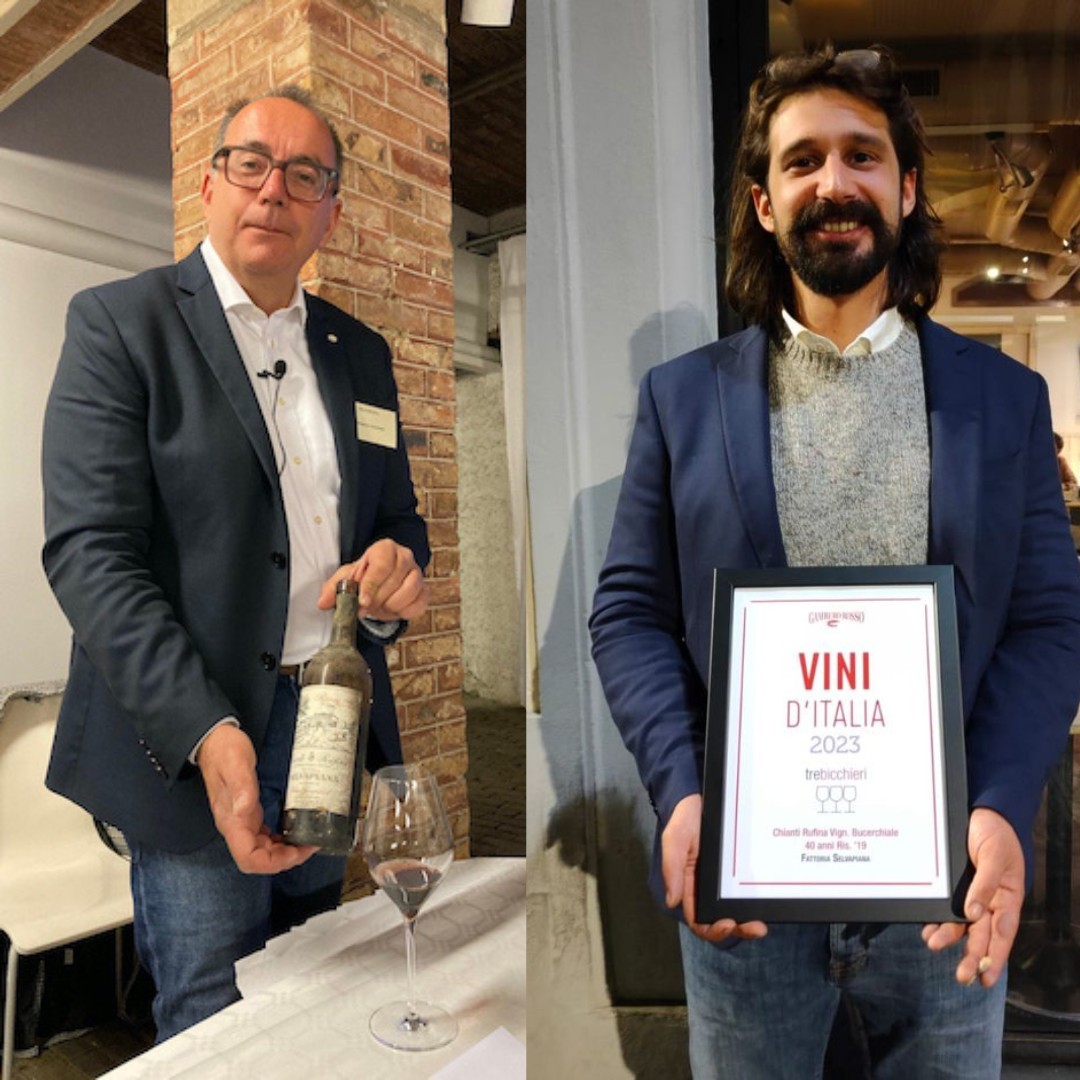
The decisive turning point at Fattoria Selvapiana came in the late 1970s under Francesco Giuntini — a vision that continues today through Federico and Niccolò Giuntini.
They understood that their uniqueness lies not in adapting to trends, but in fully embracing their terroir — with Sangiovese as its most precise interpreter.
At Selvapiana, Sangiovese is not shaped to fit a style; it is allowed to express one through its relationship with place and time. The result is not a constructed profile, but a wine grounded in origin, guided by restraint and continuity. These are wines that move beyond fashion and remain recognisable even when tasted blind — a signature built on consistency rather than variation.
As a telling detail, Federico and Niccolò Giuntini themselves avoid being at the centre of the narrative. Their focus remains firmly on their vineyards at Fattoria Selvapiana and the wine — with Sangiovese as its most faithful interpreter.