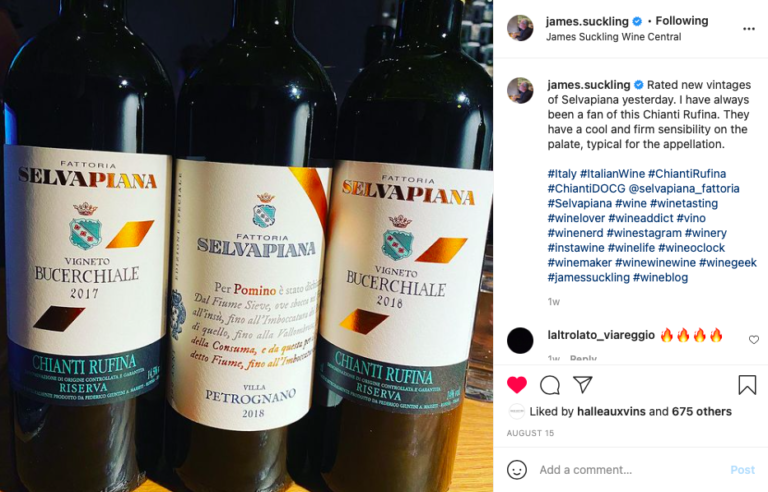
In today’s wine market, heritage is everywhere. Every estate has a story, every Italian label speaks the language of tradition. But for importers, the real question is more pragmatic: does this history translate into stability, recognisability, and long-term value? Selvapiana offers a a definitive answer — because here, history is not ornamental, it is structural.
A place shaped over centuries
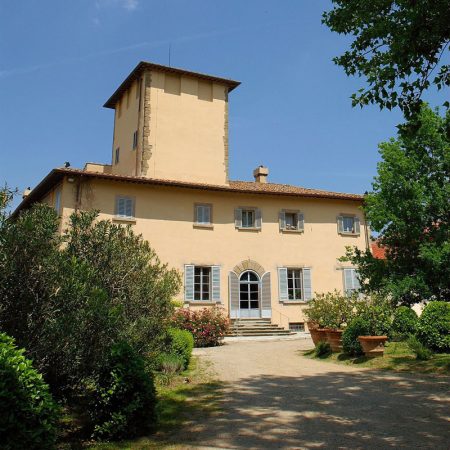
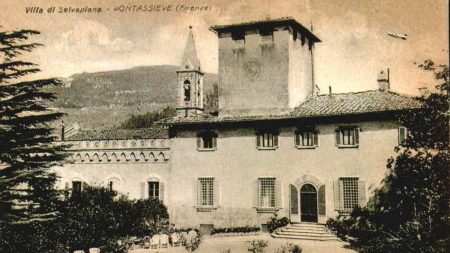
The origins of the estate date back to the Middle Ages, when Selvapiana stood as a watchtower overlooking the Sieve Valley, guarding Florence’s eastern frontier. Over time, it evolved into a Renaissance villa, closely tied to the cultural and political life of the region.
What matters in this trajectory is not simply longevity, but continuity of purpose. Selvapiana was never an accidental site of production — it has always been a place of strategic and cultural significance. That sense of place is not abstract. It continues to inform the wines today, grounding them in a landscape that has been observed, cultivated, and understood over centuries.
Nearly two centuries of family continuity
Since 1827, the estate has remained in the hands of the Giuntini family, a continuity that is increasingly rare in modern wine. This uninterrupted lineage has shaped a very specific kind of stability: not static, but evolutionary.
Rather than abrupt stylistic shifts or reactive decisions driven by market trends, Selvapiana has developed through gradual refinement. Each generation has contributed to the same direction, rather than redefining it.
For an importer, this is not a romantic detail. It is an operational advantage. Wines that maintain a consistent identity across vintages are easier to position, easier to communicate, and more likely to build lasting relationships with clients.
A defining role in Chianti Rufina
Selvapiana is not merely a reflection of Chianti Rufina — it has contributed to defining what the appellation is today. Under the leadership of Francesco Giuntini in the second half of the twentieth century, the estate made a series of decisions that would shape both its own identity and that of the appellation.
By focusing on Sangiovese as a precise expression of terroir, introducing single-vineyard wines such as Bucerchiale, and prioritising elegante structure, finesse and ageing potential over volume, Selvapiana aligned itself with a more restrained and site-driven vision of Tuscan wine.
In doing so, it helped position Rufina apart from other Chianti zones — less about immediate impact, more about clarity, precision, and longevity. This distinction, once subtle, is increasingly relevant in today’s market.
Continuity of vision, not just ownership
Perhaps the most telling aspect of Selvapiana’s history lies in how its continuity was preserved. When Francesco Giuntini passed the estate to Federico and Silvia, the children of his long-time estate manager, the transition was not simply about ownership. It was about safeguarding knowledge, philosophy, and a deep understanding of the vineyards.
This kind of succession is rare, and its effects are tangible. The wines have remained coherent, not because they resist change, but because they are guided by a consistent vision. Even as the estate evolves, its identity remains intact — a quiet but powerful form of continuity that extends beyond generations.
A stable style in a volatile market
In a category like Chianti — often perceived as broad, fragmented, and at times inconsistent — Selvapiana offers something increasingly rare: clarity. Its wines present a recognisable style, a precise expression of Sangiovese, and a firm connection to a specific origin, Chianti Rufina. For importers, this coherence translates into tangible advantages. The wines are easier to communicate, more clearly positioned within a portfolio, and require less effort to contextualise. In a complex category, that kind of definition becomes a quiet but decisive strength.
Why this matters commercially
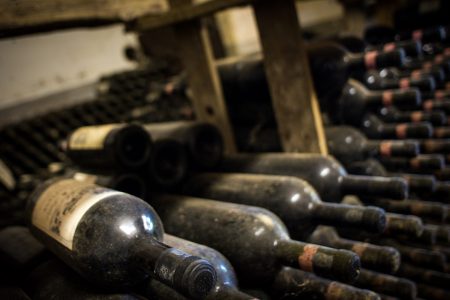
Working with an estate like Selvapiana means entering a relationship built on time, not momentum. Decades of consistency translate into a style that can be relied upon, vintage after vintage. These are wines that evolve and reward patience, naturally supporting a more premium positioning without the need for artificial elevation. At the same time, the story behind them is not constructed — it is clear, authentic, and easy to communicate. Over time, this kind of coherence does something essential: it builds value steadily, not through volume, but through trust. In this sense, history is not decorative — it becomes a quiet but powerful way of reducing uncertainty.
…and finally
In a market increasingly driven by the pursuit of novelty, reliability is often underestimated — yet it remains one of the most valuable qualities a wine can offer. Selvapiana does not rely on reinvention from vintage to vintage. Instead, it demonstrates a rare consistency, maintaining a clear stylistic identity rooted in place and time. This continuity — in quality, expression, and philosophy — is not merely reassuring. For an importer, it becomes a strategic asset, offering both clarity of positioning and long-term confidence.
One of Italy’s most influential wine scientists and a leading authority on vine genetics and terroir Attilio Scienza has observed, “Rufina is one of the most vocated areas for Sangiovese, where altitude and climate allow the grape to express elegance, longevity, and a strong territorial identity.”
In this context, Selvapiana is not simply part of that landscape —it is one of its most coherent and enduring expressions.
Marc Millon, Italian Wine Ambassador, is an expert in gastronomy, wine and travel. He is the author of 15 books. in his last book entitled *Italy in a Wineglass – the taste of history* he talks about Selvapiana in the chapter “Tower Power”: “From a medieval defensive watchtower along the Sieve river that once served to protect and safeguard the boundaries of Tuscany, Selvapiana today is the source of powerful, long-lived wines that define, defend and safeguard a precious territory : Chianti Rufina.”