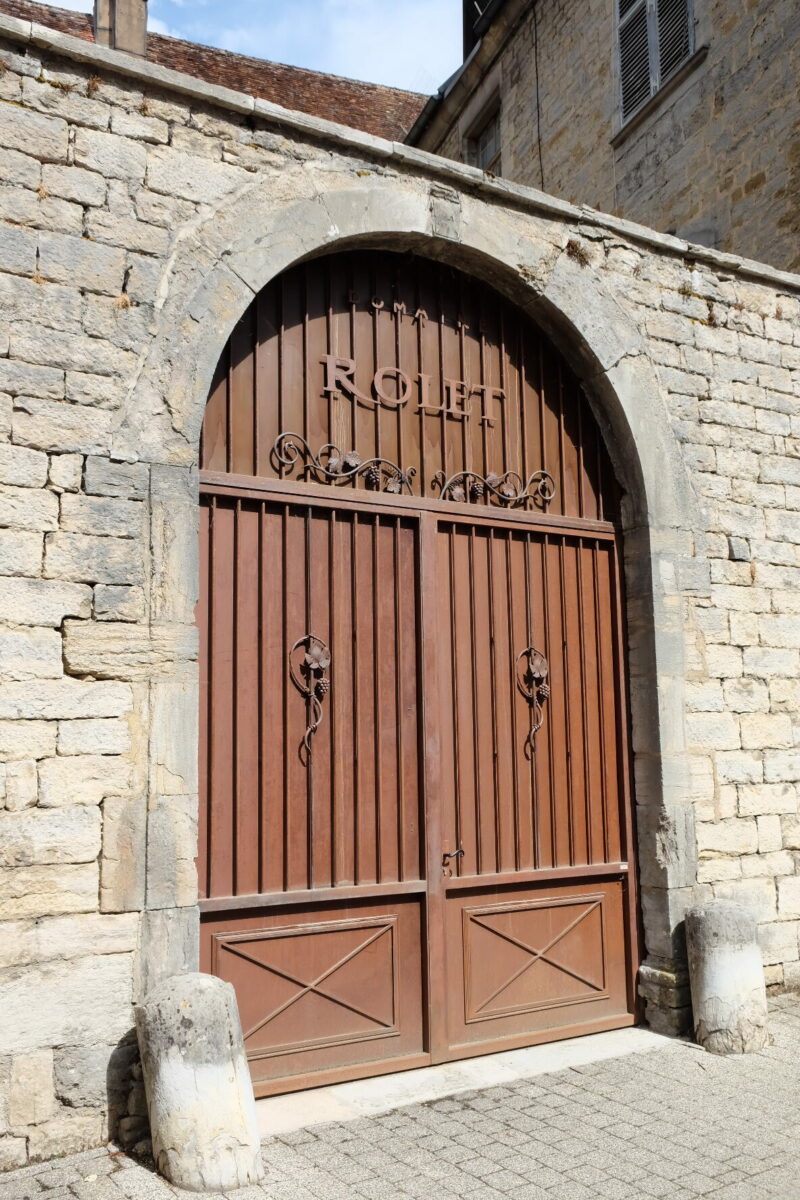
Some estates sell you a wine and ask you to imagine its future. Domaine Rolet can pour you its past.
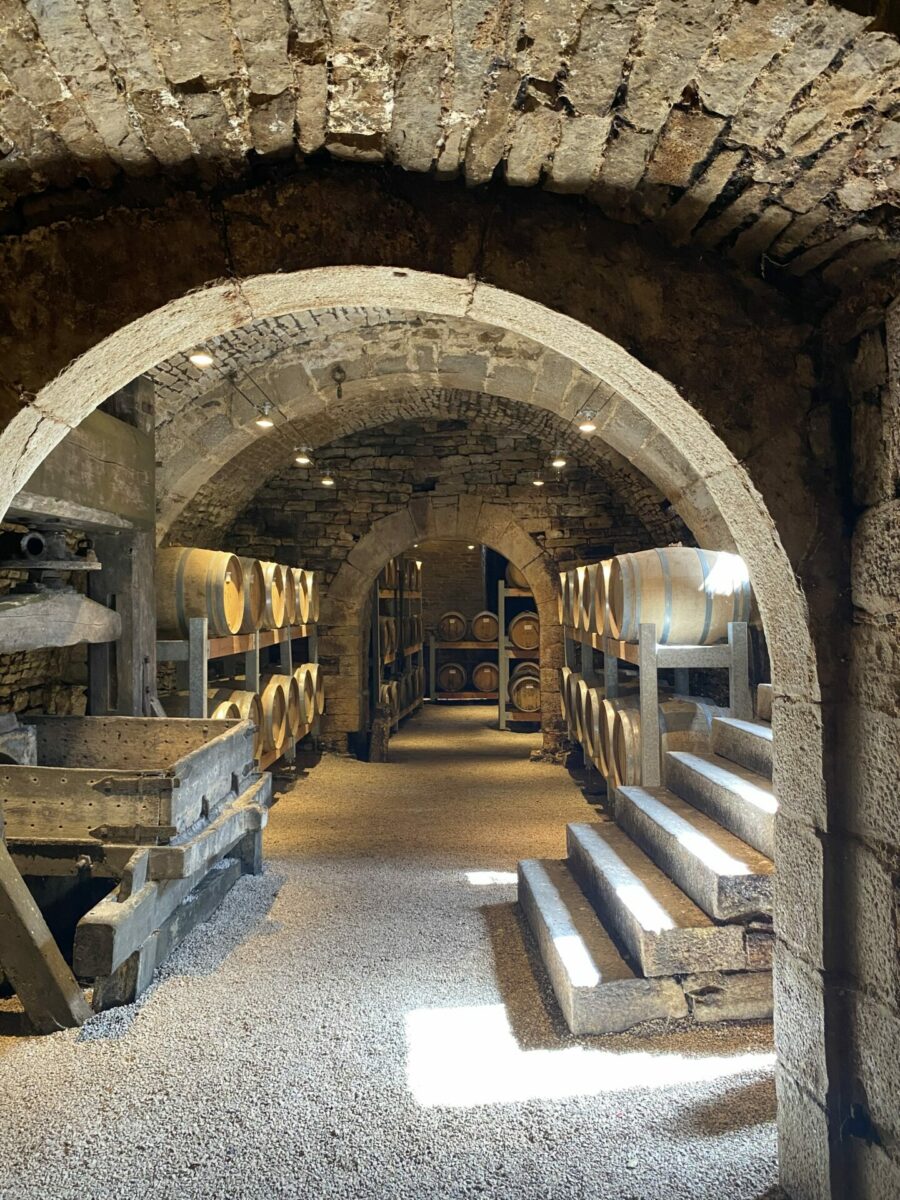
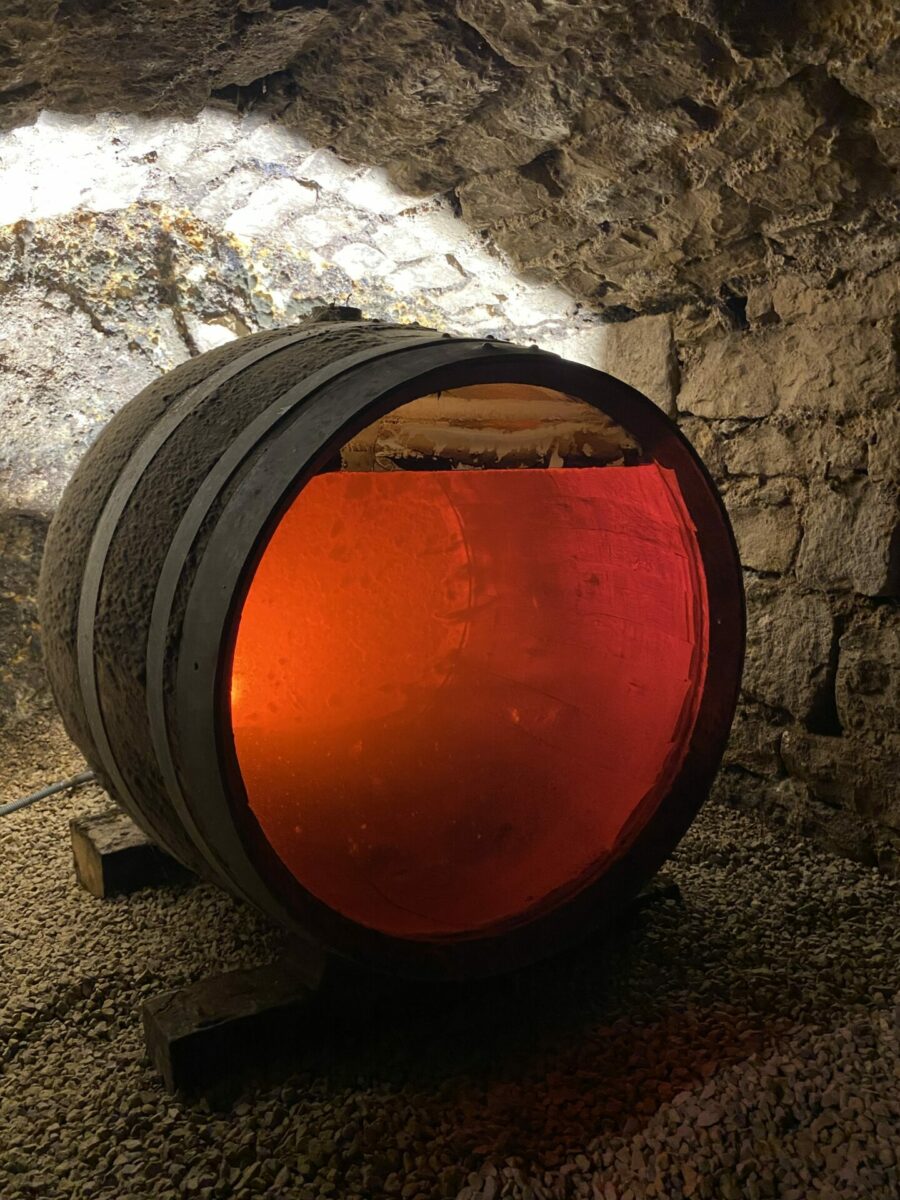
In Jura, time becomes one of wine’s ingredients. And perhaps nowhere is this more tangible than in cellars where Vin Jaune barrels stand. Here, Savagnin can disappear beneath a veil of yeast for years before emerging from the cellar as Vin Jaune. Barrels sit quietly underground or beneath the roof almost as if they are keeping time according to their own clocks. Wine here rarely exists outside time: it is waited for, observed and allowed to change. It is difficult to imagine a more fitting place for a library of old vintages.
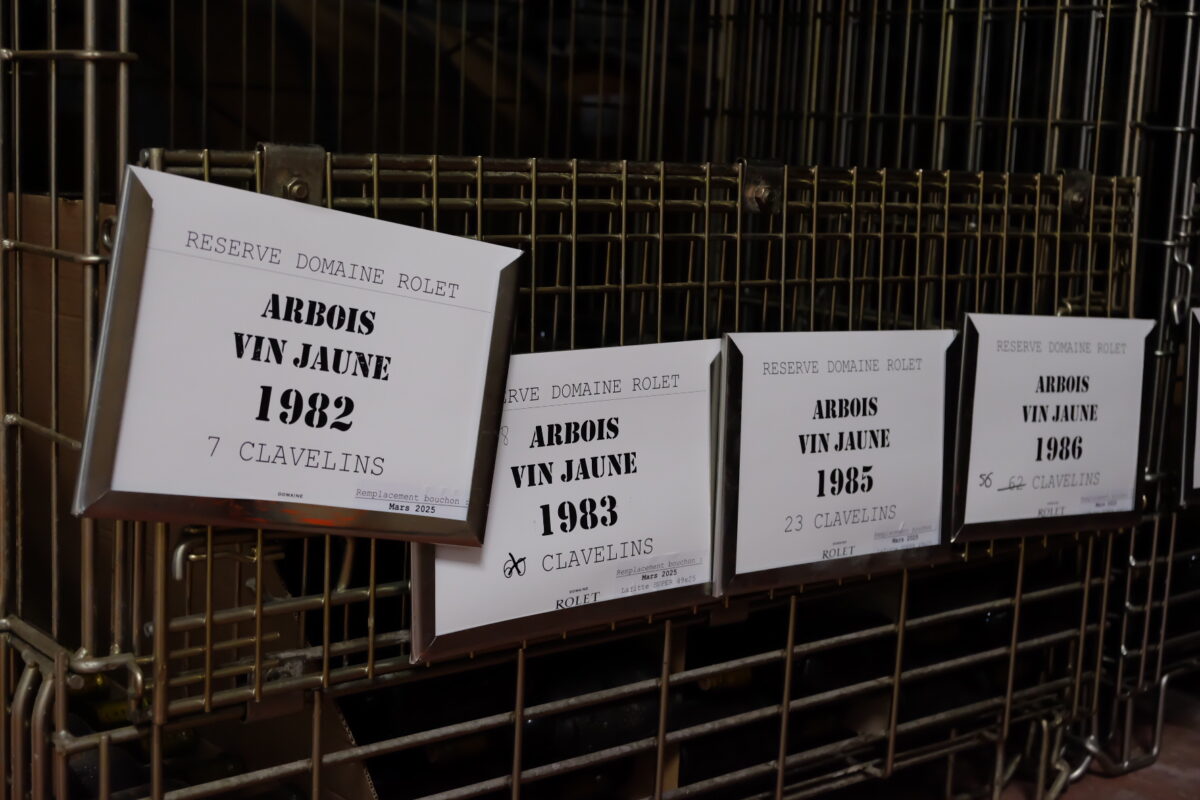
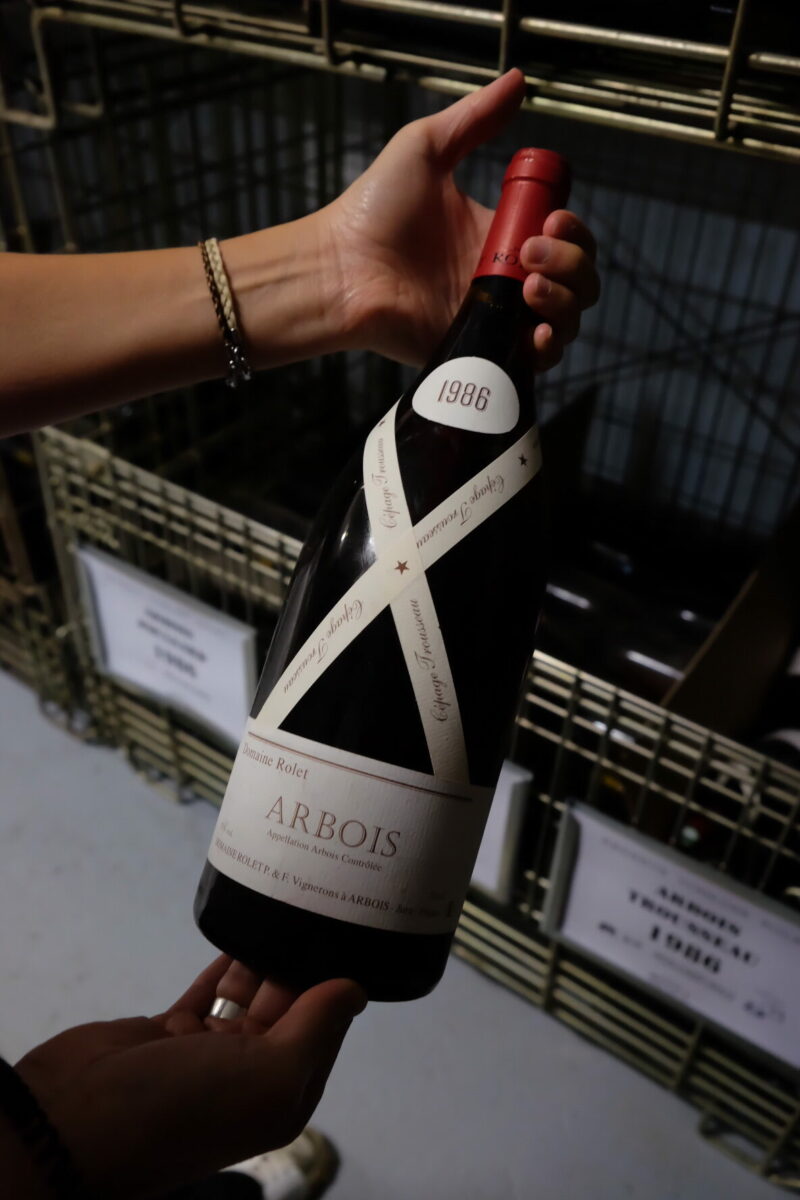
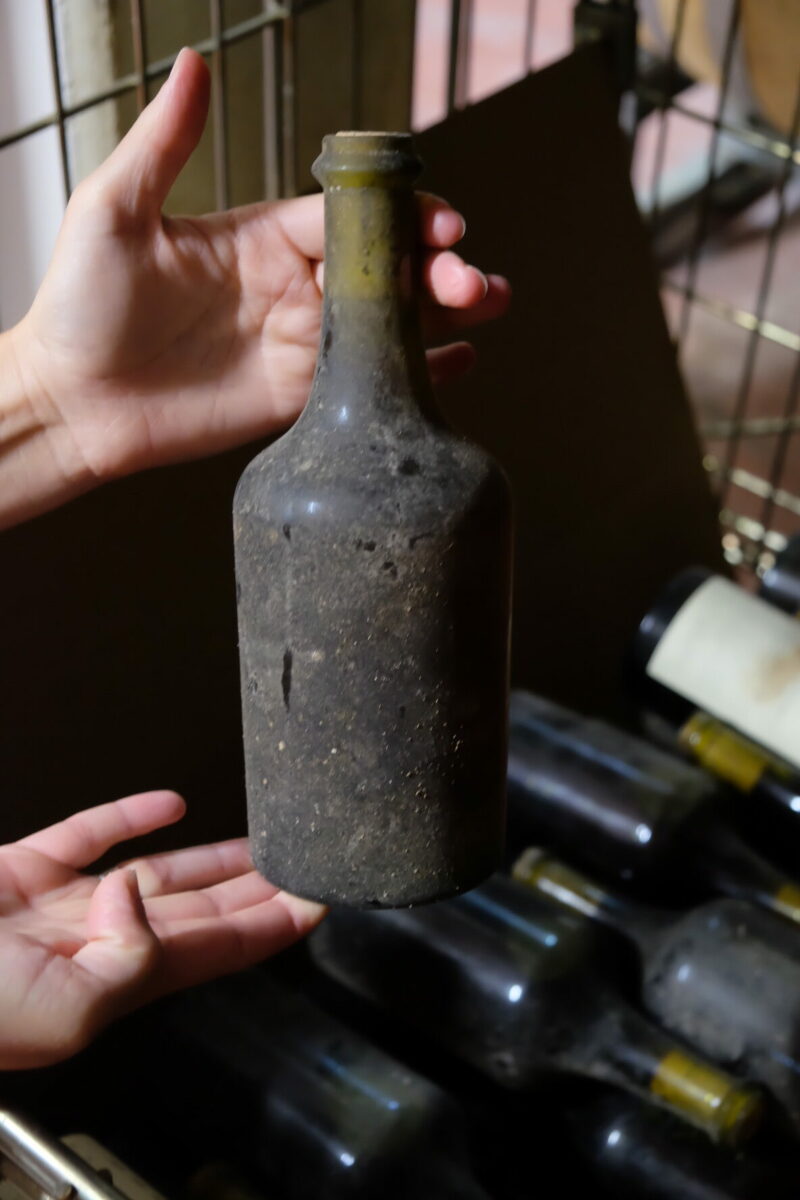
In the cellars of Domaine Rolet, wines have been quietly accumulating for decades. There are clavelins — the distinctive and mandatory 62 cl bottles used for Vin Jaune — standard bottles and magnums spanning different periods in the estate’s history. 1986, 1994, 2007: each year becomes more than a number on a label. It is a small time capsule. There is something almost childlike in the pleasure of it: uncorking a bottle and returning to the year in which it was made.
The signature of Domaine Rolet
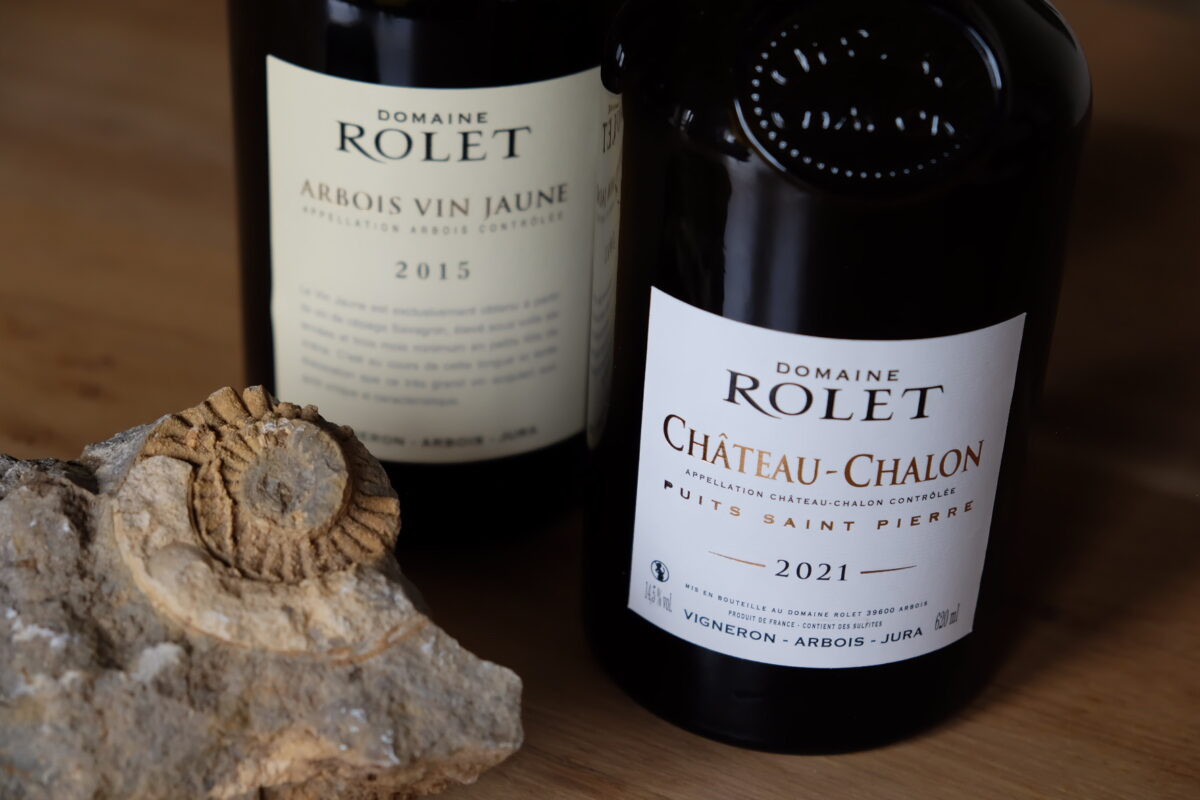
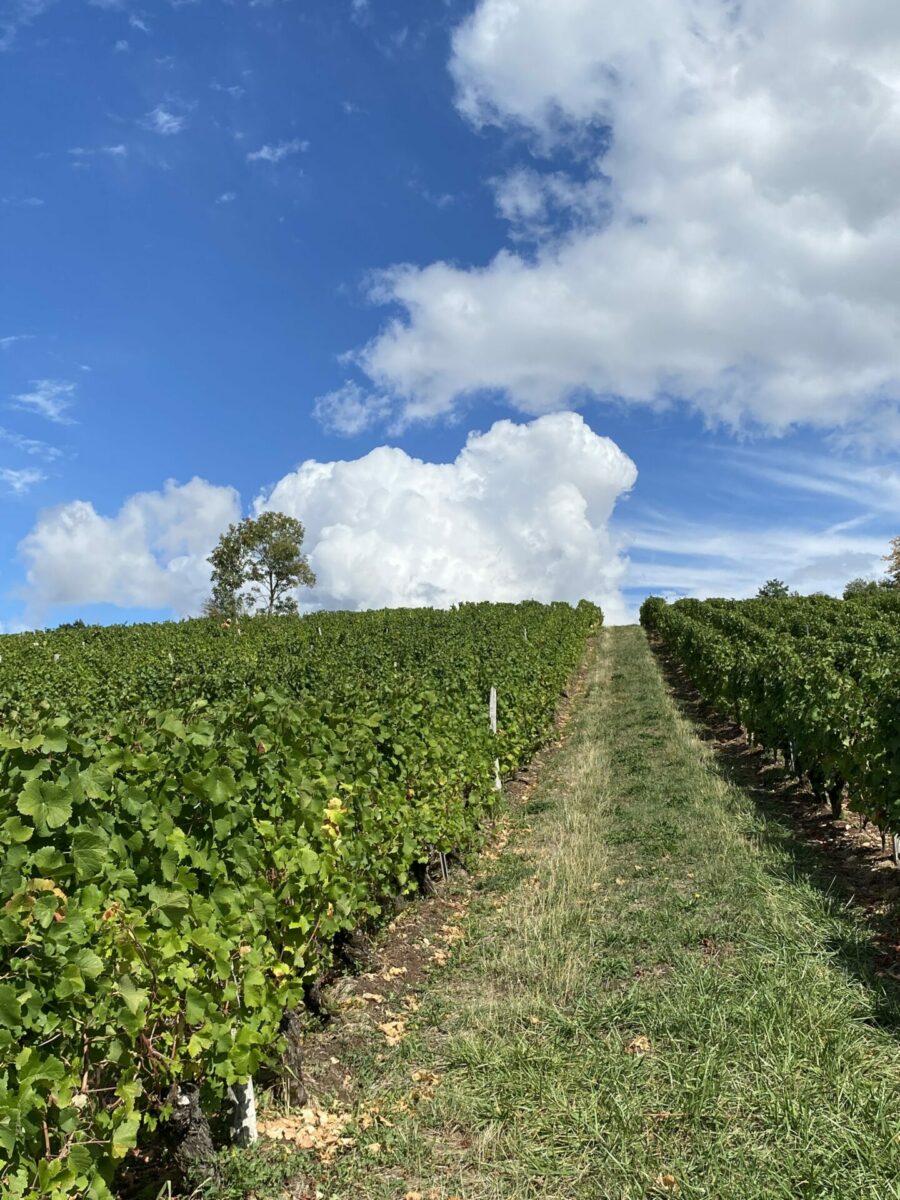
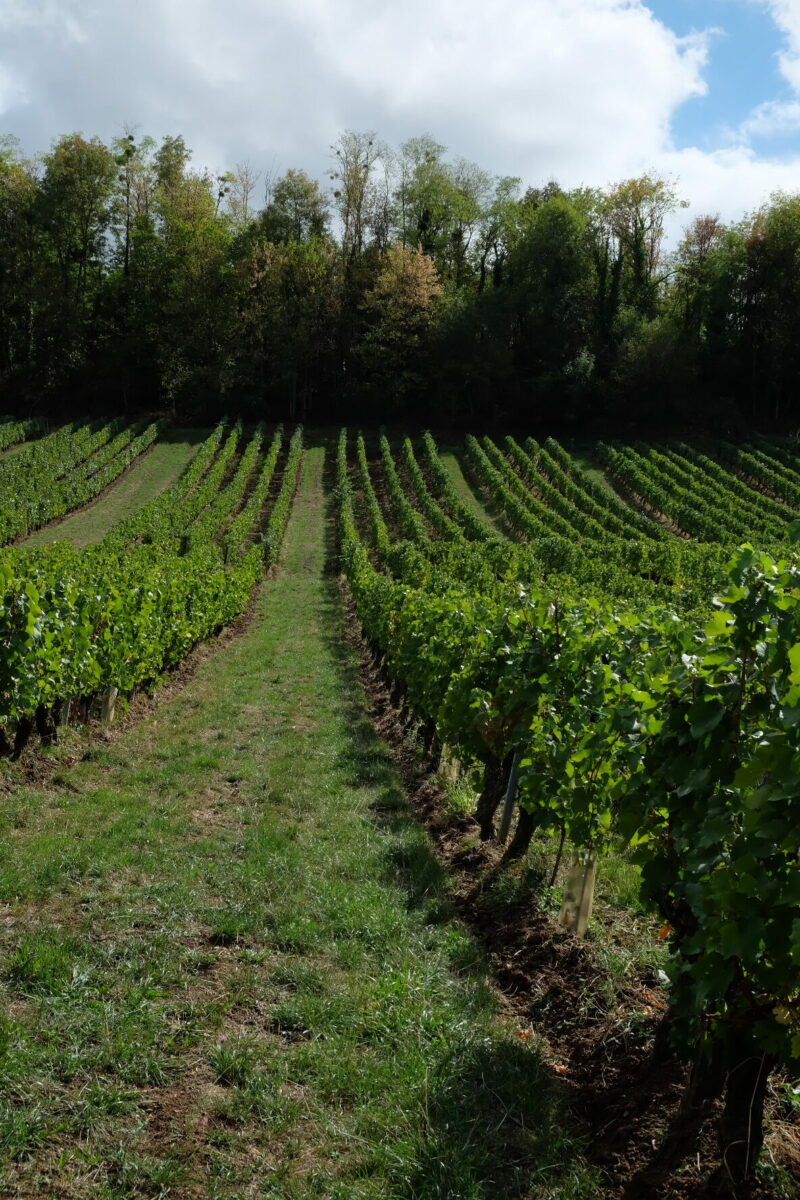
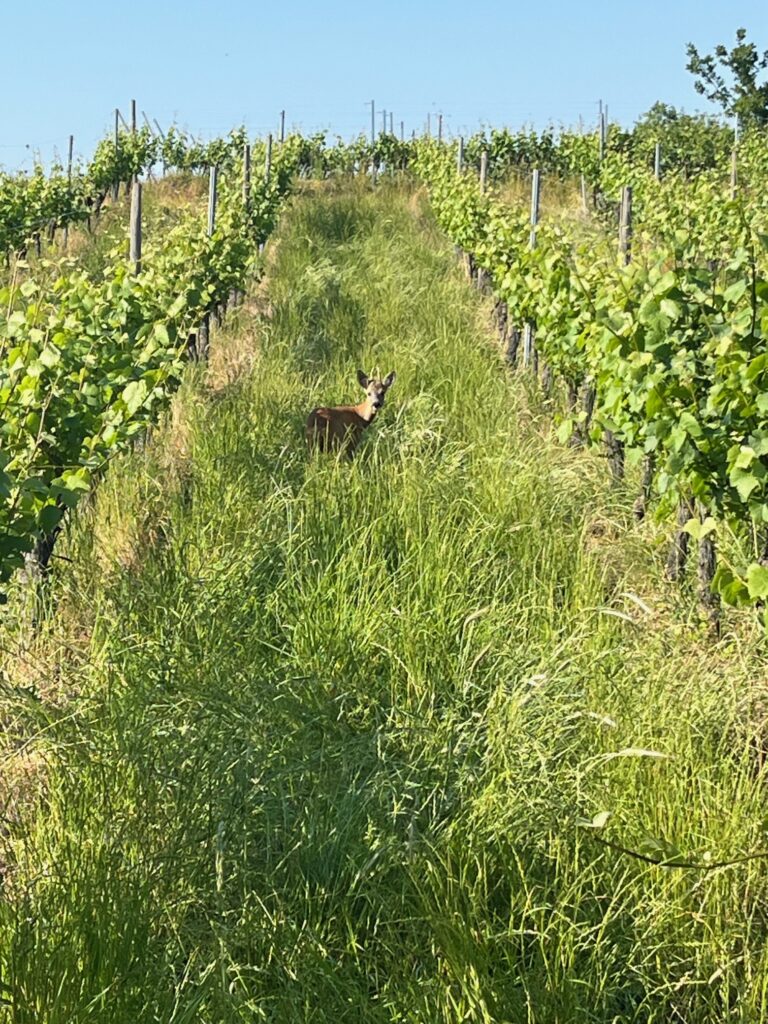
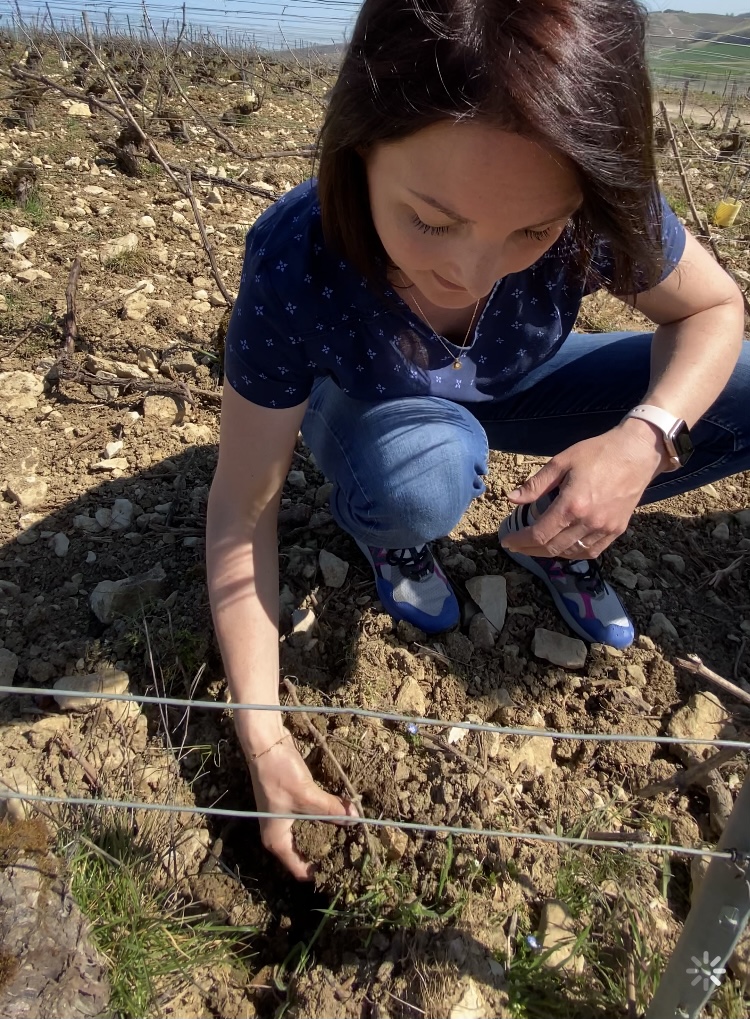
Its vineyard consists of hillside plots located in the four regional appellations— Arbois, Côtes du Jura, L’Étoile and Château-Chalon. Additionally, the domaine works with all five grape varieties that define Jura’s vinous identity: Chardonnay, Savagnin, Poulsard, Trousseau and Pinot Noir.
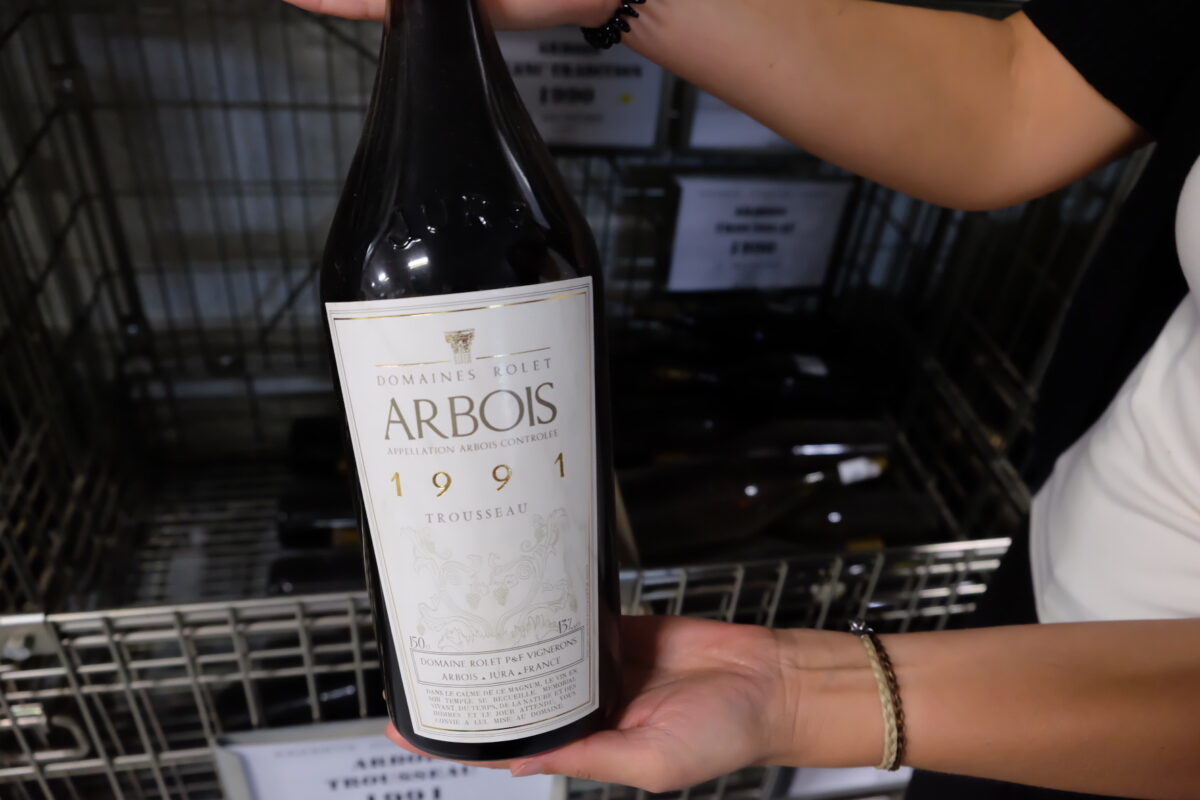
The Domaine Rolet collection contains not only old bottles, but an extraordinary range of vintage magnums. In larger formats, wine tends to evolve more slowly: fruit and freshness can be preserved for longer, while secondary and tertiary characteristics develop gradually. For mature Jura, this can be especially compelling.
The magnum format has also become something of a signature for Domaine Rolet, with the estate continuing to give it a prominent place under the management of Cédric Ducoté. The labels are still applied by hand — a small detail, perhaps, but one that feels entirely appropriate for bottles intended to live for decades.
Older bottles are interesting for another reason too. They do not only show us how wine has changed. They show us how the estate itself has changed.
Arbois remembers
To understand why a library of old vintages feels so natural here, all you need to do is leave the cellar and walk through the town.
Arbois is one of France’s smallest wine capitals: around 3,000 inhabitants, quiet streets, old houses and vineyards beginning almost immediately beyond the residential neighbourhoods.
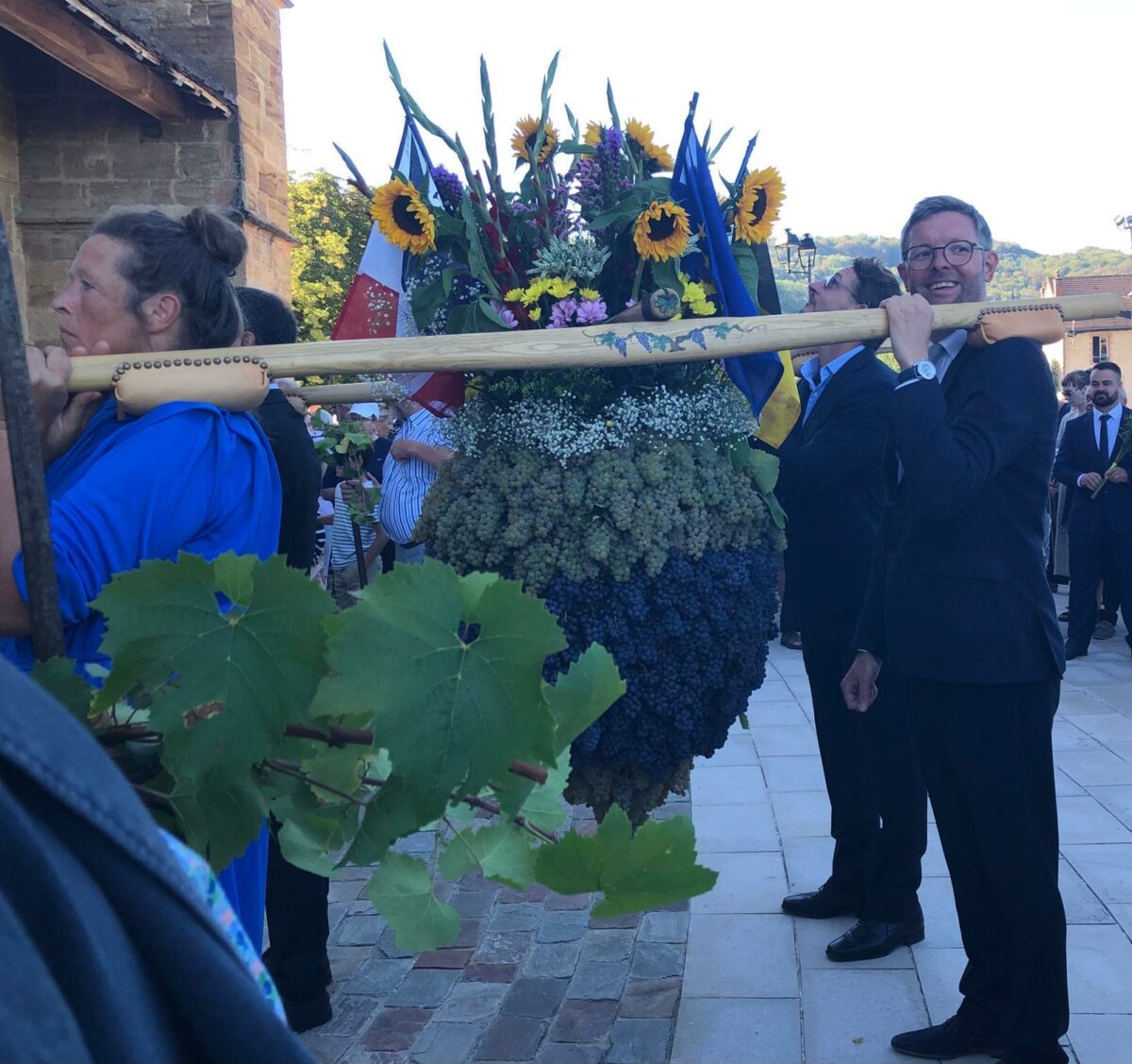
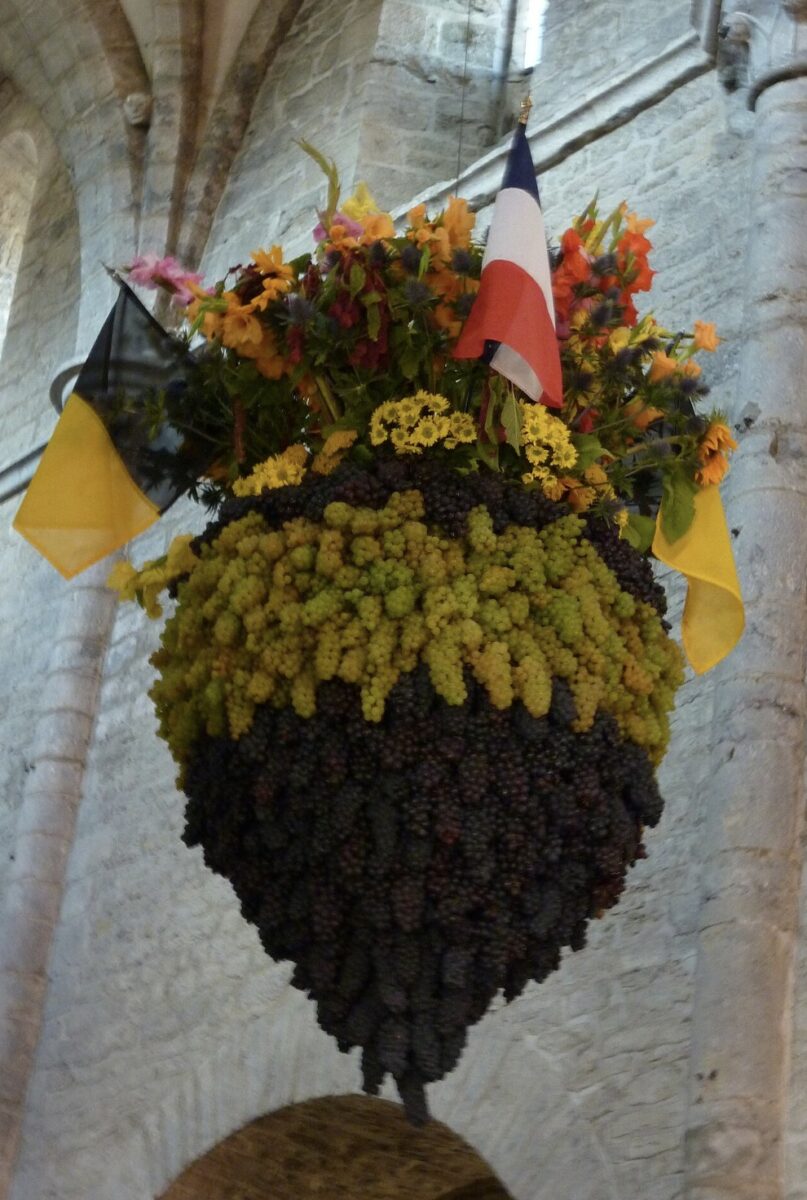
Every September, the Biou is still carried through the streets — a huge symbolic bunch on the one hand and a wreath on the other, assembled from the finest grapes donated by local winegrowers and taken ceremonially to the church of Saint-Just for the first one and to the war memorial for the second one. The first written record of the tradition dates back to 1665. Centuries later, the ritual remains at once a religious offering, a town celebration and a declaration of sorts: viticulture here has always been a collective affair.
Arbois is also inseparable from Louis Pasteur, who grew up here and, in the 1860s, worked with local wines and winegrowers while investigating fermentation and the mysterious “diseases of wine” that caused wines to spoil. Then, in 1886, phylloxera reached the vineyards of Arbois, devastating them over the following decade and pushing local growers to organise, rebuild and eventually strengthen the protection of their wine’s origin. In 1936, Arbois became one of France’s first AOCs. Six years later, Désiré Rolet founded his estate.
The vintage library preserves the moment when that change happened. From 1991 onwards, domaine Rolet magnums appear in the Jura-shaped bottle rather than the Burgundy form used before it. Place the older and younger bottles side by side and what might seem like a small design decision becomes part of the estate’s history — another reminder that a wine archive preserves more than vintages. It also records how a domaine gradually defines its identity.
The patience of Jura
There is a particular pleasure in tasting an old wine in the place where it was made.
Provenance is a dry, almost bureaucratic word that becomes increasingly romantic as a bottle ages. At Domaine Rolet, these wines have not spent thirty years travelling between auctions, collectors’ cellars and restaurant lists. They have aged patiently at the estate. The clearest expression of this idea is, of course, Vin Jaune. Its very existence is an argument against impatience.
Savagnin is aged in barrels that are deliberately not topped up. A voile — a veil of yeast — gradually forms over the surface, beneath which the wine spends years slowly changing and developing its distinctive personality.
The result is an unmistakable spectrum of aromas: walnut, spice, dried herbs, curry, savoury notes and the extraordinary persistence that makes Vin Jaune almost impossible to confuse with anything else. The wine must spend at least six years and three months ageing before it can be released. Even the bottle becomes part of this philosophy of time.
Vin Jaune is bottled in the distinctive clavelin, holding 62 cl. Traditionally, the format is associated with the approximate amount of wine left from an original litre after years of ageing and evaporation. By the time most wines are only beginning their commercial lives, Vin Jaune already has quite a biography behind it.
A useful past
There is another reason why the Domaine Rolet library is particularly interesting. And it is an entirely practical one.
Vintage libraries at wine estates often have an almost ceremonial function. A few bottles are brought out for an anniversary, for a visiting journalist or for a particularly important dinner. Everyone admires them, and then they disappear behind a locked door again.
The Domaine Rolet collection is different because part of it is still available for sale.
The scale of the collection is striking. Rolet’s currently available vintage library spans around 40 different vintages, from 1986 to 2024. The range goes far beyond a handful of symbolic archive bottles: there are mature magnums of Trousseau, Poulsard, Cuvée Mémorial and Arbois Rouge Tradition, alongside older white wines from Arbois and Côtes du Jura.
This is what makes the Domaine Rolet library so unusual: it is not simply an archive of the past, but a living collection with enough depth to be genuinely useful to importers, restaurants and collectors today.
For a sommelier, an old bottle of Arbois can give context to a younger wine already on the list. For a restaurant, mature magnums make it possible to organise dinners and vertical tastings that would otherwise take decades to build. For specialist retailers and collectors, provenance directly from the estate’s cellar removes one of the biggest uncertainties involved in buying mature wine. And for an importer, the proposition becomes rarer still. Most producers can sell an importer a young wine and its future.
Domaine Rolet can also sell part of its past
It sounds poetic, but it is also a very practical commercial advantage. Age alone guarantees nothing; there are plenty of old wines that should have been drunk many years ago. The real value lies in continuity — in being able to place a young Rolet beside an older vintage and recognise the connection between them.
The mature bottle becomes evidence for the younger one. It shows not only that a wine can age, but how it ages: what survives, what changes, what remains recognisable years later.
And this is where a vintage library becomes much more than a collection of rare bottles. It becomes a way of understanding an estate. Inside these bottles are different harvests, different moments in the life of Domaine Rolet and decisions made in the cellar long before many of the people drinking the wines today were even born. Open one, and all of it becomes tangible again.
A library of old vintages is, ultimately, a form of memory.
But in Jura, memory has never meant looking backwards alone. It helps us understand the present. And perhaps that is why Domaine Rolet’s old wines are so compelling today — not only for collectors, but for anyone who works with wine professionally. The past here has not been sealed away behind a cellar door. It is still available. You can open it, pour it into a glass and taste it.